
Root Canal vs. Tooth Extraction: Which Option Is Right?
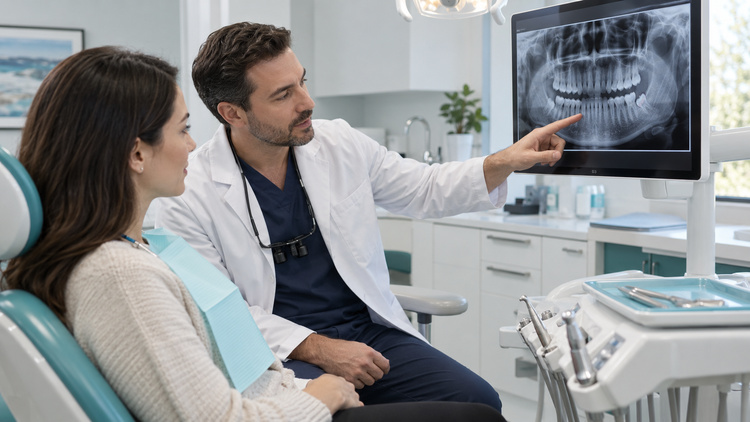
A root canal and a tooth extraction solve different problems. Root canal treatment is intended to remove infected or damaged tissue from inside a tooth while keeping the natural tooth in place. Extraction removes the entire tooth. When a tooth can be predictably restored, preserving it may be considered; when the damage is too extensive for the tooth to remain functional, extraction may be necessary. The correct choice cannot be made from symptoms alone. Your dentist may need to examine the tooth, test it and review dental X-rays before determining whether it can be saved. If you are experiencing persistent tooth pain, swelling or sensitivity, a dental exam in Newmarket can help identify the cause and available treatment options. This guide compares root canal treatment with tooth extraction, explains what happens after each procedure and outlines the factors dentists consider when deciding whether a damaged tooth may be restored or needs to be removed. Root Canal vs. Tooth Extraction: Quick Comparison Factor Root Canal Treatment Tooth Extraction Primary goal Remove damaged or infected pulp while retaining the tooth Remove the tooth completely Natural tooth retained? Yes, when treatment and restoration are successful No Restoration afterward A filling or crown may be needed The space may later be replaced with an implant, bridge or removable option When considered When the tooth can still be treated and restored When the tooth cannot be predictably saved or another clinical reason supports removal Decision basis Examination, X-rays, remaining tooth structure, infection, periodontal support and individual circumstances When May a Root Canal Be Recommended? Root canal treatment, also called endodontic treatment, is used when the pulp inside a tooth has become inflamed, infected, injured or no longer healthy. Deep decay, cracks, repeated dental procedures and trauma are among the situations that can affect the pulp. During treatment, the dentist removes the affected pulp, cleans and shapes the root canal system and fills and seals the space. The tooth is then restored so that it can continue functioning. You can read more about the procedure on our root canal therapy in Newmarket page. A root canal is not automatically appropriate for every damaged tooth. Enough healthy structure must remain for the tooth to be restored, and the surrounding tissues and bone also need to be considered. In complex cases, an endodontic assessment may be recommended. When Might a Tooth Need to Be Extracted? Extraction may be considered when a tooth cannot be predictably restored or maintained. This may occur when decay or structural damage is extensive, a fracture extends into an area that cannot be repaired, periodontal support is severely compromised, or previous efforts to save the tooth have not produced a maintainable result. The decision is individual. A tooth that appears badly damaged may sometimes still be treatable, while another tooth with fewer visible symptoms may have a crack or loss of support that changes the prognosis. For this reason, treatment should be based on clinical findings rather than appearance or pain level alone. Is It Better to Save the Natural Tooth? When a natural tooth can be predictably treated and restored, keeping it can avoid creating a missing-tooth space. The Canadian Dental Association notes that successful root canal treatment can allow a patient to retain a tooth that would otherwise need to be removed. That does not mean every tooth should be saved at any cost. The important question is whether the tooth has a reasonable prognosis after treatment and restoration. A dentist must consider the amount of remaining tooth structure, periodontal health, fracture pattern, previous treatment, bite forces and the patient’s overall dental needs. What Happens to a Tooth After Root Canal Treatment? After the root canal system has been cleaned and sealed, the tooth needs an appropriate final restoration. Depending on how much tooth structure remains and where the tooth is located, a dentist may recommend a permanent filling or a crown. Back teeth often experience substantial chewing forces, so a crown may be considered when additional protection is needed. The final recommendation depends on the tooth rather than a universal rule. Learn more about dental crowns in Newmarket and how they are used to restore damaged teeth. What Happens After a Tooth Is Extracted? Once a permanent tooth is removed, the result is a space in the dental arch. Whether that space should be replaced depends on the location of the tooth, the condition of the surrounding teeth, the bite, bone availability and the patient’s treatment goals. Possible replacement options may include a dental implant, a dental bridge or a removable prosthesis. Each option has different requirements, benefits and limitations, and not every patient is a candidate for every treatment. Leaving a space untreated may also be appropriate in selected circumstances, but that decision should be made after considering the bite and neighbouring teeth. Which Option Costs Less? There is no single cost comparison that applies to every patient. The cost of root canal treatment depends on factors such as the tooth involved, treatment complexity and the restoration required afterward. Extraction costs also vary, and removing a tooth may create additional future costs if the space is replaced with an implant, bridge or another prosthesis. Insurance coverage also varies by plan. Before deciding between treatments primarily on price, ask for an estimate that includes the full treatment sequence rather than comparing only the first procedure. Is a Root Canal More Painful Than an Extraction? Both procedures are generally performed using local anaesthesia, but the experience and recovery vary from person to person. Pain before treatment is often related to the underlying inflammation, infection or injury rather than the procedure itself. After a root canal, some tenderness may occur for several days. After an extraction, the socket and surrounding tissues must heal after the tooth has been removed. Neither procedure should be selected solely because it is assumed to be more or less painful. Can an Infected Tooth Be Treated Without a Root Canal or Extraction? If the pulp inside the
Chipped Tooth: What to Do and When It’s a Dental Emergency

Not every chipped tooth is a dental emergency, but every new chip or fracture should be assessed by a dentist. A small chip without pain may be able to wait for a regular dental appointment, while a larger break, severe pain, bleeding, swelling or significant dental trauma may need urgent care. If you have just chipped a tooth, rinse your mouth gently with water, avoid chewing on the affected side and save any broken piece you can find. If the tooth is painful, bleeding or badly broken, contact a dentist promptly. For severe dental pain, significant bleeding or a major tooth fracture, see our emergency dentist in Newmarket information. Is a Chipped Tooth a Dental Emergency? It depends on the size of the chip, how the injury happened and whether you have pain, bleeding, swelling or other symptoms. What You Notice How Urgent May It Be? What to Do Small chip with no pain Usually not an emergency Book a dental appointment to have the tooth assessed Sharp or rough edge Prompt dental assessment Avoid biting on the tooth and protect your tongue or cheek from the sharp edge Sensitivity or pain when biting Should be assessed promptly Contact your dentist because the damage may extend beyond the outer enamel Large piece of tooth has broken off Urgent Contact a dentist as soon as possible and bring the broken fragment if available Severe pain, bleeding or increasing swelling Urgent Contact a dentist immediately for instructions and assessment Major facial injury or uncontrolled bleeding Medical emergency Seek emergency medical care The Ontario Dental Association advises contacting a dentist as soon as possible for a chipped or broken tooth, particularly when there is pain or bleeding. Small, painless chips may not require emergency treatment, but they should still be examined. Cleveland Clinic similarly distinguishes a small painless chip from more serious fractures associated with significant pain or other symptoms. What Should You Do Immediately After Chipping a Tooth? The goal is to protect the tooth and surrounding tissues until a dentist can assess the damage. If you need pain relief while waiting for dental care, use an over-the-counter medication only if it is appropriate for you and follow the package directions or advice from a healthcare professional. Do not place aspirin or another pain medication directly against the tooth or gum. Why Did My Tooth Chip? A tooth can chip because of a sudden injury or because its structure has gradually become weaker. Sometimes the underlying cause is obvious, while in other cases a dentist needs to examine the tooth to determine why it fractured. Why Are My Teeth Chipping So Easily? Repeated chipping deserves a dental assessment because there can be more than one contributing factor. The dentist may look for decay, worn enamel, large restorations, grinding or clenching, bite-related forces and existing cracks. A chip does not necessarily mean that you have poor oral hygiene, and a tooth that appears healthy from the outside can still have structural weakness. A dental examination can help identify whether a specific tooth or a broader bite or oral-health issue is contributing to repeated fractures. Can a Tooth Chip While Eating? Yes. A tooth can break while chewing, particularly when biting something hard, but sometimes a tooth chips during an ordinary meal because it was already weakened by decay, a large restoration or an existing crack. If a tooth seems to have chipped “for no reason,” the dental examination is important because the visible break may be the first sign of an underlying structural problem. How Can You Tell How Serious a Chipped Tooth Is? The appearance of the tooth is only part of the assessment. A dentist may evaluate the size and location of the fracture, whether enamel or deeper tooth structure is involved, your symptoms, the condition of existing fillings and whether there are signs of pulp or root involvement. Dental X-rays may be appropriate when the dentist needs to evaluate damage that cannot be seen directly. Small Enamel Chip A small chip limited to the outer enamel may cause little or no pain. Depending on its location and appearance, the dentist may smooth the edge or restore the missing area with tooth-coloured material. Deeper Chip or Fracture A larger fracture can expose dentin, the layer beneath the enamel. This may cause sensitivity to temperature, pressure or chewing and usually requires restorative treatment. Damage Involving the Dental Pulp If a fracture reaches or significantly affects the pulp inside the tooth, symptoms may include substantial pain, lingering sensitivity or other signs of pulp injury. Root canal treatment may be considered when the pulp is inflamed or infected, but a chipped tooth does not automatically mean that a root canal is required. How Is a Chipped Tooth Fixed? Treatment depends on how much tooth structure was lost, where the fracture is located, whether the pulp is involved and how much healthy tooth remains. Smoothing or Polishing A very small enamel chip may sometimes only require smoothing or polishing if the dentist determines that additional restoration is unnecessary. Reattaching the Broken Fragment In selected cases, a dentist may be able to reattach a fragment of natural tooth. This is one reason to save the broken piece and bring it to your appointment. Composite Bonding or Filling Material For some small or moderate chips, tooth-coloured composite material can be used to rebuild the missing portion of the tooth. Whether this is suitable depends on the location and extent of the damage. Dental Crown A more extensively damaged tooth may need a crown to cover and protect the remaining tooth structure. The amount of healthy tooth remaining, the condition of the pulp and the position of the fracture all influence whether a crown is appropriate. Learn more about dental crowns in Newmarket. Root Canal Treatment A root canal may be recommended when the pulp inside a damaged tooth becomes inflamed or infected. The American Association of Endodontists notes that cracks, chips and dental trauma can affect
What to Eat After Wisdom Tooth Extraction: Foods by Recovery Stage

What to eat after wisdom tooth extraction depends on how your mouth is healing, but for the first few days, choose soft foods that require little chewing, such as yogurt, applesauce, mashed potatoes, eggs, smooth soups and smoothies eaten with a spoon. As soreness improves, you can gradually add more solid foods based on comfort and the instructions from your dentist or oral surgeon. Avoid hard, crunchy, chewy, very hot and spicy foods during early healing. Do not use a straw during the first few days because suction can disturb the blood clot at the extraction site. Your own post-operative instructions take priority because recovery varies according to the number and position of the teeth removed and how involved the procedure was. For information about the procedure itself, see our wisdom tooth extraction in Newmarket page. What Can You Eat After Wisdom Tooth Extraction? Start with foods that are soft, easy to swallow and unlikely to irritate the surgical site. The American Association of Oral and Maxillofacial Surgeons recommends a soft or liquid-based diet during the first few days after wisdom tooth surgery. Recovery Stage Foods That May Be Easier to Eat What to Avoid Day of surgery Yogurt, applesauce, pudding, smooth cooled soup, smoothies without a straw Hot foods, crunchy foods, chewing near the surgical site, straws First few days Mashed potatoes, scrambled eggs, oatmeal, soft pasta, cottage cheese, soft cooked foods Nuts, seeds, popcorn, chips, hard bread, sticky or chewy foods As soreness improves Gradually add foods that require more chewing, based on comfort Anything that causes pain, catches in the socket or requires forceful chewing Later recovery Return toward your usual diet as the surgical site heals and chewing becomes comfortable Do not rush back to hard or crunchy foods if the area remains tender This is a general guide rather than a fixed schedule. A straightforward extraction may feel different from removal of a deeply impacted wisdom tooth. Best Soft Foods After Wisdom Teeth Removal You do not need a special “healing food.” The practical goal is to choose foods that provide nourishment without requiring much chewing or irritating the extraction site. Yogurt Smooth yogurt is soft and easy to eat when chewing is uncomfortable. Avoid varieties containing hard granola, seeds or crunchy toppings during early healing. Mashed Potatoes Mashed potatoes require little chewing and can be made thinner or smoother if your mouth is particularly sore. Allow them to cool before eating because very hot foods and drinks may irritate the surgical area. Scrambled Eggs Soft scrambled eggs are another option during the first few days and provide protein without requiring hard chewing. Applesauce and Other Smooth Purees Applesauce and smooth fruit or vegetable purees can be easier to manage than raw fruits and vegetables. Avoid acidic foods if they sting or irritate the extraction site. Smooth Soups and Broths Soup can be useful when chewing is uncomfortable, but let it cool to a comfortable temperature first. Avoid soups containing hard pieces, seeds or crunchy toppings during early recovery. Smoothies Smoothies can provide an easy way to combine soft ingredients. Drink them from a cup or eat them with a spoon rather than using a straw. Avoid adding seeds, nuts or other small hard particles that may become trapped around the extraction site. Soft Pasta and Oatmeal As chewing becomes more comfortable, very soft pasta and well-cooked oatmeal may be easier to add back into your diet. Allow hot foods to cool before eating. What Should You Eat on the Day of Wisdom Tooth Removal? After surgery, wait until your dental provider says it is appropriate to eat and until you can do so safely after anaesthesia or sedation. If your mouth is still numb, be careful not to bite your cheek, lip or tongue. When you are ready to eat, choose foods that can be swallowed with minimal chewing. Examples include yogurt, applesauce, pudding, smooth soup that has cooled, or a smoothie without a straw. Chew away from the extraction site when possible and stop if eating causes increased pain or bleeding. What Can You Eat During the First Few Days? AAOMS recommends maintaining a soft diet during the first few days after wisdom tooth surgery. As the initial soreness begins to improve, you can add foods with slightly more texture. Scrambled eggs Mashed potatoes or other soft vegetables Soft pasta Oatmeal that has cooled to a comfortable temperature Cottage cheese or yogurt Soft fish or other tender foods if chewing is comfortable You do not need to progress through a rigid food schedule. If a food causes discomfort or requires substantial chewing, wait and try it again later. When Can You Eat Solid Food After Wisdom Tooth Extraction? There is no single day when every patient should return to solid food. AAOMS recommends slowly reintroducing solid foods when you feel comfortable, while continuing to avoid foods that irritate the healing site. How quickly you progress depends on factors such as the complexity of the extraction, swelling, jaw soreness and how the socket is healing. Follow any specific diet instructions given by the dentist or oral surgeon who performed the procedure. When Can You Eat Crunchy Food After Wisdom Teeth Removal? Do not rush back to crunchy foods while the extraction site is still tender or collecting food. Nuts, seeds, popcorn, chips and other hard or sharp foods can irritate healing tissues or become lodged in the socket. There is no universal “safe day” for crunchy food. Reintroduce firmer foods gradually once chewing is comfortable and the surgical area has progressed in healing. If you had a difficult surgical extraction, your dental provider may advise waiting longer. If you are unsure whether the socket is healing normally, our guide explains how a wisdom tooth hole closes during recovery. Foods and Drinks to Avoid During Early Healing Certain foods can irritate the extraction site, require excessive chewing or leave small particles behind. Hard and crunchy foods: chips, popcorn, nuts, hard crackers and similar foods.
How Long Does a Wisdom Tooth Hole Take to Close?

A wisdom tooth hole usually becomes smaller gradually over several weeks rather than closing all at once. New gum tissue begins forming during the early stages of healing, but the exact time it takes for the socket to close depends on the depth of the extraction site, how difficult the tooth was to remove and how your body heals. According to the American Association of Oral and Maxillofacial Surgeons, new tissue begins regenerating around the surgical site during the first one to two weeks, with continued healing over the following weeks. The socket may still feel like a depression even after pain and swelling have improved. If your wisdom tooth was recently removed, follow the instructions provided by your dentist or oral surgeon. For information about the procedure itself, see our wisdom tooth extraction in Newmarket page. How Long Does a Wisdom Tooth Hole Take to Close? There is no single closure date that applies to everyone. The visible socket generally becomes smaller as soft tissue grows across the area, and this process commonly continues over several weeks. The surface of the gum and the deeper extraction site also heal at different rates. The opening you can see in the mouth may become much smaller before the bone underneath has finished healing and remodelling. Approximate Stage What May Be Happening What You May Notice First 24 hours A protective blood clot forms and early healing begins Bleeding or oozing, soreness and swelling may occur Days 2–7 Early tissue repair continues The socket is still visible and discomfort should generally begin improving Weeks 1–2 New tissue begins regenerating across the surgical site The opening may become smaller but can still be noticeable Weeks 2–4 and beyond Soft-tissue healing continues The socket may continue narrowing over several weeks After the surface closes Deeper tissues continue healing and remodelling A shallow depression may remain for some time These stages are general rather than guaranteed deadlines. A complicated surgical extraction may heal differently from a fully erupted wisdom tooth that was easier to remove. Why Is My Wisdom Tooth Hole Still Open? A visible hole does not automatically mean that healing has stopped. Wisdom teeth are located far back in the jaw, and some extraction sites are deeper than others. The socket can remain visible while new tissue gradually fills the area. Healing time may also vary depending on how the tooth was positioned and how it was removed. An impacted wisdom tooth may require a more involved surgical procedure than a fully erupted tooth. If the opening is becoming smaller and your discomfort is steadily improving, that can be consistent with continued healing. Contact your dentist if the area is not improving, becomes more painful, repeatedly traps food despite appropriate cleaning, or develops other concerning symptoms. Is It Normal for the Hole to Still Be Open After Two Weeks? It can be. During the first one to two weeks, new tissue is developing at the extraction site, but the socket may still be visible. AAOMS notes that the surgical site continues healing during the following two to four weeks and that individual recovery times vary. How the area feels is also important. A visible opening with gradually improving symptoms is different from an extraction site that develops severe or increasing pain. What If the Wisdom Tooth Hole Is Still Open After Four to Six Weeks? Some sockets, particularly deeper surgical sites, may still have a visible indentation several weeks after extraction. UCLH notes that a tooth socket can take a few weeks to close completely. If your socket still looks open but has been steadily becoming smaller and you have no worsening pain, swelling, discharge or bleeding, the appearance alone does not prove that something is wrong. If you are concerned that the site has stopped changing or food continually becomes trapped in the area, arrange a dental examination so the healing site can be checked directly. What If My Wisdom Tooth Hole Never Closed? An extraction site should not remain an actively open surgical wound indefinitely. However, after healing, the gum and bone in the area may not have exactly the same contour they had before the tooth was removed. What feels like a small hole or depression may therefore be healed tissue rather than an unhealed socket. If you believe an extraction site is still genuinely open months or years later, particularly if it traps food, drains fluid, causes pain, develops swelling or has an unpleasant taste or smell, it should be examined by a dentist rather than diagnosed from appearance alone. What Factors Affect How Quickly a Wisdom Tooth Socket Closes? Wisdom tooth recovery varies because no two extraction sites are exactly the same. Factors that can influence the healing process include: How Should You Care for the Hole While It Is Closing? The goal is not to force the socket to close faster. Instead, protect the area and support normal healing. During the First 24 Hours The Canadian Dental Association advises avoiding rinsing during the first 24 hours after minor oral surgery because disturbing the area can interfere with clot formation. After the First 24 Hours For meal ideas during the early recovery period, see our guide to foods to eat after wisdom tooth extraction. How Do You Keep Food Out of a Wisdom Tooth Hole? Food can become trapped in a healing socket because the opening remains present while new tissue develops. Avoid digging food out with your fingers, toothpicks or other objects. After the first 24 hours, gentle warm-water or saltwater rinsing may help remove loose food particles. Some oral surgeons provide an irrigation syringe later in the healing process, but only use one when and how your dental provider instructs you to. AAOMS notes that some patients may be instructed to irrigate extraction sites until food no longer becomes trapped. The timing and method should be individualized by the clinician who performed the surgery. Is an Open Wisdom Tooth Hole the Same as Dry Socket?
CDCP Coverage for Dental Crowns: What Newmarket Patients Should Know
The Canadian Dental Care Plan (CDCP) may help cover an eligible dental crown, but crown coverage is not automatic. Dental crowns require preauthorization, which means the treatment must be reviewed against the CDCP’s clinical criteria before coverage is confirmed. Coverage can depend on the condition of the tooth, whether it can be predictably restored, your current CDCP eligibility, frequency limits and other treatment needs. Even when a crown is approved, you may still have a co-payment or additional charges. Eagle Family Dentistry currently welcomes patients covered by the Canadian Dental Care Plan in Newmarket. If a dentist determines that a crown may be appropriate, the next step is to review your treatment needs and the CDCP requirements that apply to your situation. Learn more about our CDCP information for Newmarket patients. Does the CDCP Cover Dental Crowns? Yes, the CDCP can consider certain single-unit dental crowns for coverage when the plan’s clinical requirements are met. However, crowns are among the services that require preauthorization. According to the current Government of Canada Dental Benefits Guide, crown coverage may be considered for CDCP clients who are 18 years of age or older. Eligible crown types include: Being enrolled in the CDCP does not mean every crown request will be approved. The tooth and proposed treatment must meet the program’s eligibility and restorability criteria. Why Do Dental Crowns Require Preauthorization? Preauthorization is the process used by the CDCP to review certain treatments before they are carried out. For a dental crown, the dental provider submits information supporting why the crown is needed and why the tooth is suitable for restoration. The CDCP assesses these requests using clinical criteria established by Health Canada. Preauthorization allows the patient and dental provider to know whether the requested service has been approved for coverage before proceeding. A preauthorization decision does not replace your general CDCP eligibility. Your coverage must still be active on the date the service is provided. What Information May Be Needed for Crown Preauthorization? The dental office may need to submit clinical documentation with a crown request. The current CDCP Dental Benefits Guide lists documentation that may include: The required documentation is submitted by the oral health provider. Patients should not assume that a crown has been approved until the preauthorization decision has been received. What Makes a Tooth Eligible for CDCP Crown Coverage? The CDCP does not base crown coverage solely on whether a tooth is cracked, filled or uncomfortable. The tooth must meet both eligibility and restorability requirements. In general, the program considers whether the tooth has adequate periodontal support, sufficient healthy tooth structure and a condition that makes a direct restoration such as a filling inadequate. The dentist also needs to consider whether the tooth can be predictably restored. Active dental disease can also affect the timing of a crown request. The current CDCP policy states that basic treatment addressing active caries and periodontal disease must be completed before a crown request is submitted. If you are unsure whether a damaged tooth needs a crown, a dental exam in Newmarket can help determine the condition of the tooth and the available restorative options. Does CDCP Cover a Crown After Root Canal Treatment? A tooth that has received root canal treatment may be considered for CDCP crown coverage when the applicable crown criteria are satisfied. However, the CDCP states that an endodontically treated tooth must have healed before a crown request is submitted. The amount of remaining tooth structure and the restorability of the tooth are also part of the assessment. Not every root-canal-treated tooth automatically qualifies for a crown, and not every tooth requires the same restoration. Learn more about root canal therapy in Newmarket. Are Cosmetic Crowns Covered by the CDCP? The CDCP does not consider a crown for coverage when the purpose is solely to improve appearance. Crown requests are assessed based on oral-health and restorative criteria rather than cosmetic preference alone. A tooth may still qualify when there is significant structural damage and the clinical requirements are met, but the decision is based on the condition and restorability of the tooth rather than an aesthetic goal. Does CDCP Cover Implant Crowns? No. Implant-supported crowns are excluded from CDCP coverage. The current Dental Benefits Guide states that implant-supported crowns and other implant-related procedures are not covered by the CDCP. This distinction is important because a crown placed on a natural tooth is different from a crown attached to a dental implant. The two treatments are subject to different CDCP rules. How Often Can CDCP Cover a Dental Crown? The CDCP applies frequency limitations to eligible crowns. Under the current Dental Benefits Guide, the limits are: Coverage Limit Current CDCP Rule Total crowns per client Up to 4 crowns in any 120-month (10-year) period Same eligible tooth 1 crown in any 96-month (8-year) period These frequency rules do not guarantee approval. The tooth must still meet the CDCP’s clinical criteria and the crown must receive preauthorization. How Much Does the CDCP Pay for a Crown? The amount paid by the CDCP depends partly on your adjusted family net income and is based on the CDCP’s established fees for eligible services. Adjusted Family Net Income CDCP Portion of Eligible CDCP Fee Patient Co-payment Below $70,000 100% 0% of the CDCP established fee $70,000–$79,999 60% 40% of the CDCP established fee $80,000–$89,999 40% 60% of the CDCP established fee A 0% co-payment does not necessarily mean that treatment will cost the patient nothing. The dental office’s fee may differ from the CDCP-established fee, and services outside CDCP coverage can also result in additional charges. Before starting treatment, ask what amount the CDCP is expected to cover and whether you may have an amount to pay directly. What Does Preauthorization Approval Mean? An approved preauthorization means the requested treatment has been reviewed under the CDCP rules in effect at that time. Most preauthorization decisions are valid for up to 12 months, provided the patient’s CDCP coverage remains active on the date of
Blood Clot After Tooth Extraction: What’s Normal & Warning Signs

A blood clot normally forms in the socket after a tooth is removed and helps protect the underlying bone while healing begins. If the clot becomes loose or is lost too early, the risk of a painful complication called dry socket increases. However, a socket that looks different a few days later does not automatically mean the clot has been lost or that you have dry socket. New or worsening pain is usually more important than appearance alone. Contact your dentist if pain becomes severe after initially improving, bleeding will not slow, swelling keeps getting worse, or you develop fever, discharge, a bad taste or another concerning symptom. The instructions provided by the dentist or oral surgeon who performed your extraction should take priority over general online advice. If your extraction involved a wisdom tooth, you can also review our wisdom tooth extraction in Newmarket information. What Should a Blood Clot Look Like After Tooth Extraction? Immediately after an extraction, blood collects inside the socket and forms a clot. A fresh clot may look red or dark and can have a soft or jelly-like appearance. As healing continues, what you see in the socket can change as new tissue develops. For that reason, it is difficult to judge healing only by looking into the socket. Do not poke, pull at or repeatedly inspect the area with your tongue, fingers or another object. What You Notice What It May Mean What to Do Blood-stained saliva or mild oozing soon after extraction Can occur during early healing Use gauze and follow your dentist’s instructions Socket appearance changes over the next several days Healing tissue may change how the area looks Avoid disturbing the site and monitor symptoms Socket looks different but there is no new severe pain Appearance alone does not confirm dry socket Continue aftercare and contact your dentist if concerned Severe or increasing pain a few days after extraction May indicate dry socket or another complication Contact your dentist or oral surgeon How Do You Know If You Lost or Dislodged the Blood Clot? You may not be able to tell from appearance alone whether the blood clot has been dislodged. The more important warning sign is a change in symptoms, especially pain that becomes significantly worse instead of gradually improving. Dry socket can occur when the clot breaks down or becomes displaced, leaving the underlying bone more exposed. Symptoms may include severe pain around the extraction site, pain that extends toward the ear, and an unpleasant smell or taste. If the socket seems empty but you are not experiencing new or worsening pain, that does not by itself confirm dry socket. Healing tissue can also change the appearance of the extraction site. What If the Blood Clot Comes Out 3–5 Days After Tooth Extraction? If you think the clot came out several days after the extraction, first pay attention to how you feel. A visual change without new severe pain does not necessarily mean there is a complication. Contact your dentist if you develop strong or worsening pain, persistent bleeding, a foul taste or smell, visible exposed bone, increasing swelling, fever or discharge from the area. If it is day five or later and the area looks different but discomfort is continuing to improve, avoid trying to recreate, remove or manipulate the clot yourself. Continue the aftercare instructions provided by your dental team and ask them to assess the site if you are unsure. Does Losing the Blood Clot Always Mean Dry Socket? No. A change in the appearance of the extraction site does not automatically mean you have dry socket. Dry socket is a painful post-extraction condition associated with breakdown or displacement of the protective clot. Significant pain is an important feature. If you are worried because the socket looks different but you do not have new or increasing pain, contact your dentist for advice rather than diagnosing the site from appearance alone. Dry Socket Symptoms: What Should You Watch For? Dry socket is different from routine soreness after an extraction. Some discomfort is expected after oral surgery, but it should generally begin to improve rather than suddenly become much worse. Dry socket is not the same thing as a dental infection, although some symptoms can overlap. A dentist or oral surgeon should assess significant or worsening symptoms rather than relying on appearance alone. Normal Healing vs. Post-Extraction Complications May Occur During Normal Healing Contact Your Dentist Mild bleeding or oozing early after surgery Heavy bleeding that cannot be controlled with firm gauze pressure Soreness during the first few days Severe pain that is not improving or becomes significantly worse Some swelling after the procedure Swelling that continues to worsen after the early recovery period A changing appearance inside the socket Fever, pus or discharge, or other signs that may indicate infection The Canadian Dental Association notes that some pain, bleeding and swelling can occur after minor oral surgery. It also advises contacting the dentist or oral surgeon when bleeding cannot be controlled, pain is not improving, fever develops or swelling continues to worsen. How to Protect the Blood Clot After Tooth Extraction The goal of aftercare is to avoid unnecessary disturbance of the socket while normal healing begins. Follow the specific instructions you received after your extraction. During the First 24 Hours After the First 24 Hours For additional food ideas during recovery, read soft foods to eat after wisdom tooth extraction. What Should You Avoid While the Socket Is Healing? Actions that create suction, irritate the wound or interfere with clotting can make recovery more difficult. Avoid disturbing the extraction area unless your dental provider has specifically instructed you to clean it in a certain way. What If You Accidentally Rinsed or Used a Straw? Accidentally rinsing your mouth or using a straw once does not prove that the blood clot has been dislodged. Stop the activity, avoid repeatedly checking the socket and return to the aftercare instructions provided by your dentist. Monitor how you
Dental Implant Aftercare: Recovery, Food & Warning Signs

Good dental implant aftercare focuses on protecting the surgical site while the gums and bone begin to heal. In the first few days, follow the instructions provided by your dentist or oral surgeon, avoid disturbing the area, choose foods that are easy to chew and watch for symptoms that are becoming worse instead of gradually improving. Some soreness, swelling and minor oozing can occur after oral surgery. Recovery is different for every patient, and instructions may also vary depending on the number of implants placed, whether a tooth was removed at the same appointment and whether procedures such as bone grafting were performed. This guide covers general dental implant aftercare. Your own post-operative instructions should take priority because they are based on your procedure and medical history. What Should You Do During the First 24 Hours? The first day is mainly about protecting the surgical area and allowing a stable blood clot and early healing response to develop. What Can You Eat After Dental Implant Surgery? During the early recovery period, choose foods that require minimal chewing and are unlikely to irritate the surgical site. Examples may include eggs, yogurt, oatmeal that has cooled, soft pasta, mashed vegetables, smoothies eaten with a spoon and other foods recommended by your dental provider. Avoid hard, crunchy or very chewy foods while the area is tender. Try not to chew directly over the surgical site until your dentist tells you that normal chewing can resume. If you have temporary teeth or a temporary restoration over the implant, follow any additional chewing restrictions given by your dentist. Temporary restorations may require different care from the final implant-supported crown or bridge. How Should You Brush and Clean Around a New Implant? Continue caring for the rest of your mouth, but avoid directly brushing or flossing the surgical wound until your dentist says it is appropriate. The Canadian Dental Association advises patients to brush and floss the other teeth while staying away from the wound during the early healing period. After the first 24 hours, gentle rinsing with warm water may be appropriate. Your dentist or oral surgeon may also recommend a saltwater rinse or another specific cleaning method. Do not introduce medicated mouth rinses unless they have been recommended for your situation. Once healing allows normal cleaning around the implant, long-term plaque control becomes important. Implant-supported teeth need regular brushing, interdental cleaning and professional follow-up, much like natural teeth. Learn more about the overall treatment process on our dental implants in Newmarket page. How Much Pain and Swelling Is Normal? Some discomfort and swelling can occur after implant surgery because the procedure involves the gums and jawbone. The amount varies depending on the procedure and the individual patient. According to the Canadian Dental Association, discomfort after minor oral surgery may be greatest during the first 24 to 48 hours. Swelling can also develop during the first day. Follow the pain-control instructions provided by your dentist, oral surgeon and pharmacist rather than changing medication doses on your own. A cold compress may be recommended during the first day to help manage swelling. Place the compress on the outside of the face rather than directly against the surgical site inside the mouth. What Should You Avoid After Implant Surgery? How Long Does a Dental Implant Take to Heal? There are several stages of healing after dental implant placement. The gum tissue may become more comfortable within days or weeks, but healing inside the jaw takes longer. During a process called osseointegration, the bone heals around the implant and helps stabilize it. The Canadian Dental Association notes that this process may take several months. The exact timeline depends on factors such as the implant location, bone condition, the surgical procedure and the individual healing response. The final crown, bridge or other implant-supported restoration may therefore be placed at a later stage. In some cases, temporary teeth may be used during healing. Your dentist will determine the sequence that is appropriate for your treatment. When Should You Call Your Dentist After Implant Surgery? Contact your dentist or oral surgeon when symptoms are more severe than expected, do not begin to improve or start getting worse after initially improving. If the problem involves significant bleeding, rapidly increasing facial swelling, difficulty breathing or swallowing, or another serious dental emergency, seek urgent care. Our emergency dentist in Newmarket page explains how to contact the clinic for urgent dental concerns. Long-Term Care After the Implant Has Healed Implant aftercare does not end when the surgical area feels normal. Plaque can still collect around implant-supported teeth and the surrounding gums. The Canadian Dental Association recommends regular dental checkups so that the bite, implant stability and surrounding tissues can be monitored over time. Frequently Asked Questions Can I brush my teeth after dental implant surgery? You can usually continue brushing the rest of your teeth, but avoid directly brushing the surgical wound until your dentist says it is appropriate. Follow the cleaning instructions given after your procedure. Can I rinse my mouth after getting a dental implant? Avoid vigorous rinsing during the first 24 hours unless your dentist has instructed otherwise. Gentle rinsing may be recommended after the first day. What foods should I avoid after implant surgery? Avoid foods that are hard, crunchy, very chewy or likely to irritate the surgical area. Choose foods that require minimal chewing and follow any specific restrictions for temporary restorations. How long will swelling last after a dental implant? Some swelling can occur during the early days after oral surgery. Contact your dental provider if swelling continues to worsen rather than beginning to improve, or if you develop fever or other concerning symptoms. When can I return to normal eating? The timeline depends on your procedure, the location of the implant and whether temporary teeth or additional surgery were involved. Gradually return to normal foods according to your dentist’s instructions rather than using a fixed recovery schedule. Does a dental implant need special care after it heals?
How to Manage Bleeding Gums: Emergency Dental Advice

Bleeding gums should not be ignored when the problem keeps returning or occurs without an obvious reason. Minor bleeding may sometimes follow aggressive brushing, flossing or irritation, but repeated bleeding can also be associated with inflammation or gum disease. Early gingivitis may cause bleeding without significant pain. Use a soft-bristled toothbrush, brush gently and continue cleaning carefully between your teeth. Do not stop your oral hygiene routine solely because the gums bleed. If the bleeding persists, becomes frequent or is accompanied by swelling, discomfort or other changes, arrange a dental exam in Newmarket so the cause can be identified. This guide explains what you can do for minor gum bleeding, possible causes and when professional or urgent care may be needed. It provides general information and does not replace an individual dental or medical assessment. How to Stop Minor Gum Bleeding at Home The appropriate response depends on why the gums are bleeding. These measures may help protect irritated tissues while you arrange care when needed: Home care may help with mild irritation, but it cannot remove tartar or determine whether gum disease, infection, medication or another condition is contributing to the bleeding. Why Do Gums Bleed? Bleeding is a symptom rather than a diagnosis. A dental assessment may be needed to distinguish temporary irritation from a condition requiring treatment. Gingivitis and Gum Disease Plaque collecting around the gumline can cause inflammation known as gingivitis. The gums may appear red or puffy and may bleed during brushing or flossing. Gingivitis is not always painful, which means bleeding may be one of the first noticeable signs. If inflammation progresses, the tissues supporting the teeth may become affected. More advanced gum disease can involve gum recession, deeper spaces around the teeth, persistent bad breath, changes in the bite or loose teeth. Early assessment can help determine the extent of the problem and the appropriate care. Brushing or Flossing Trauma Brushing forcefully, using a hard-bristled toothbrush or snapping floss against the gums may injure delicate tissues. Some people also notice temporary bleeding when they begin cleaning between their teeth more consistently. Technique matters: the goal is thorough but gentle plaque removal. Plaque, Tartar and Local Irritation Food debris, plaque, tartar, a damaged restoration or irritation around a partially erupted tooth may contribute to localized bleeding. Tartar cannot be removed with ordinary brushing and flossing, so a professional dental cleaning may be recommended when deposits are present. Pregnancy and Hormonal Changes Hormonal changes during pregnancy can make the gums more sensitive and prone to bleeding. Regular dental care remains important during pregnancy. Tell your dentist that you are pregnant and report any persistent swelling, bleeding or discomfort. Medications and Health Conditions Some medications, including blood-thinning medicines, may make bleeding easier to notice or more difficult to control. Certain medical conditions can also affect bleeding or healing. Do not stop or change a prescribed medication without speaking with the prescribing healthcare professional. Tell your dentist about your medications, diagnosed conditions and any other unusual bleeding or bruising. Coordination with a physician may be appropriate when the pattern suggests that the cause is not limited to the gums. When Should You See a Dentist for Bleeding Gums? Arrange a dental assessment when bleeding: When Is Bleeding from the Mouth Urgent? Most bleeding associated with routine brushing is not a medical emergency. Seek prompt dental care when bleeding is heavy, follows an injury or dental procedure, or does not slow with continuous pressure. Contact an emergency dentist in Newmarket when the problem involves significant dental pain, a damaged or loose tooth, rapidly increasing swelling, pus, fever or another sign that may indicate infection or injury. Seek emergency medical care for heavy mouth bleeding that will not stop, serious facial or jaw trauma, faintness, difficulty breathing or swallowing, or rapidly spreading swelling involving the mouth, face, throat or neck. How a Dentist Assesses Bleeding Gums A dental evaluation may include questions about when the bleeding began, how often it occurs, oral hygiene habits, recent dental treatment, medications and relevant health conditions. The dentist may examine: Dental X-rays or additional tests may be recommended when the examination suggests bone changes, infection or another concern that cannot be assessed visually. How Are Bleeding Gums Treated? Treatment depends on the cause and severity. Recommendations may include improvements to brushing and interdental cleaning, professional plaque and tartar removal, treatment of a damaged tooth or restoration, or periodontal care. When inflammation is limited to gingivitis, professional care combined with effective home hygiene may allow the gums to return to health. More advanced gum disease may require cleaning below the gumline, ongoing periodontal maintenance or referral for additional care. Antibiotics, medicated rinses or other products are not automatically required for every case of bleeding gums. Use them only when recommended for your specific situation, and follow the directions provided by your dentist, physician or pharmacist. Can Home Remedies Cure Bleeding Gums? Home care can reduce avoidable irritation and support gum health, but it cannot confirm the cause or remove hardened tartar. A gentle warm saltwater rinse may temporarily soothe irritated oral tissues, but it should not be considered a treatment for gum disease or a substitute for dental care. Avoid applying harsh chemicals, concentrated antiseptics or unapproved substances directly to the gums. Do not rely on pain relief alone when bleeding keeps returning, because early gum disease may cause little or no pain. How to Help Prevent Bleeding Gums Frequently Asked Questions Is it normal for gums to bleed when brushing? An isolated episode may result from brushing too hard, accidental irritation or beginning a new interdental-cleaning routine. Bleeding that happens regularly or almost every time you brush should be assessed because it may indicate gingivitis or another problem. Should I stop brushing if my gums bleed? Do not stop cleaning your teeth solely because the gums bleed. Switch to a soft-bristled toothbrush, reduce the pressure and use a gentle technique. Persistent bleeding still requires professional evaluation. Can gingivitis cause bleeding without pain?
Dental Implants vs. Dentures: What’s the right fit for you?

Neither option is right for everyone. Dental implants are fixed replacements that are anchored in the jawbone and involve a surgical phase; dentures are removable replacements that involve no surgery. The better choice depends on how many teeth are missing, the health of your gums and jawbone, your general health, and how you feel about daily removal and cleaning versus a fixed tooth. The sections below compare the two honestly, and an assessment at Eagle Family Dentistry in Newmarket can confirm which fits your situation. Call (905) 836-6111. Comparing dental implants vs dentures in Newmarket? Both can replace missing teeth, but they work in different ways. Dental implants are placed in the jawbone to support replacement teeth, while conventional dentures are removable appliances that replace some or all missing teeth. Neither option is automatically better for everyone. The choice depends on your oral health, available bone, number of missing teeth, treatment preferences, maintenance needs, timeline and care preferences. If you are considering implants, our dental implants in Newmarket page explains candidacy, treatment planning and implant options in more detail. This guide focuses specifically on the differences between dental implants and dentures so you can understand the trade-offs before discussing your options with a dentist. What Are Dental Implants? A dental implant is an artificial tooth root, commonly made of titanium, that is placed in the jawbone to support a replacement tooth or another dental restoration. Depending on the treatment plan, implants may support a single crown, a bridge or a larger implant-supported restoration. Because the implant is placed in the jawbone, treatment requires enough healthy bone and suitable oral health. According to the Canadian Dental Association, patients generally need healthy gums and sufficient jawbone to support an implant. When bone volume is insufficient, bone grafting may be considered in some cases. What Is the Dental Implant Process? Dental implant treatment begins with an assessment of your teeth, gums, bite and the area where teeth are missing. Dental imaging may also be required to evaluate the available bone and surrounding structures. The treatment plan depends on the number and location of missing teeth, your oral health and the type of restoration that will be supported by the implant. If implant treatment is appropriate, the implant is surgically placed into the jawbone. Local anaesthesia is generally used to numb the treatment area. After placement, the implant and surrounding tissues need time to heal. The implant can gradually integrate with the surrounding bone, a process known as osseointegration, which may take several months. After appropriate healing, an abutment and final restoration may be placed according to the treatment plan. Depending on the number of missing teeth, the restoration may be an implant-supported crown or bridge. Not every patient follows exactly the same sequence, and additional procedures such as bone grafting are only recommended when clinically necessary. What Are Dentures? Dentures are removable replacements for missing teeth and surrounding tissues. They are custom-made to fit the mouth and may be used when several teeth or all teeth in an arch are missing. The Canadian Dental Association describes two main types of conventional dentures: partial dentures and complete dentures. Dentures do not require an implant to function, although implants can sometimes be used to help support certain removable overdentures. Partial vs. Complete Dentures Partial dentures replace one or more missing teeth when some natural teeth remain. They may use clasps or other components to help keep the appliance in place and can be removed for cleaning. Complete dentures, also called full dentures, replace all of the natural teeth in an upper or lower arch. Conventional complete dentures are removable and rest on the gums and supporting tissues. An implant-supported overdenture is different from a conventional denture. It remains removable but attaches to dental implants for additional support. Fixed implant-supported restorations are another category and should not be confused with conventional removable dentures. Dental Implants vs Dentures: Key Differences The most important difference is how the replacement teeth are supported. Dental implants are anchored in the jawbone, while conventional dentures are removable and generally rest on the gums, with partial dentures sometimes using remaining teeth for support. Comparison Dental Implants Conventional Dentures Support Placed in the jawbone to support a restoration Removable appliance supported by oral tissues and, for some partial dentures, remaining teeth Surgery Implant placement involves a surgical procedure Conventional dentures generally do not require implant surgery Bone Requirements Sufficient bone is required; grafting may be considered when needed Do not require bone for implant anchorage, although fit depends on the shape and condition of the supporting tissues Removal Implant-supported crowns and many implant restorations are fixed Partial and complete conventional dentures are removable Maintenance Require careful brushing, cleaning between teeth or around the implant and regular dental monitoring Require daily cleaning, removal as directed and periodic assessment of fit Treatment Time Often involves several stages and a healing period Usually does not require osseointegration, although fabrication and adjustment require appointments Follow-up Monitor the implant, surrounding tissues and restoration Review denture fit and assess adjustments or relining as needed Implants vs Dentures: Stability and Chewing Because implants are anchored in the jawbone, implant-supported restorations can provide a fixed or more stable form of tooth replacement in appropriate cases. Conventional dentures rely on the supporting tissues and their fit, so some patients may need time to adapt to eating and speaking with them. Fit can also change over time because the mouth and supporting tissues can change. Dentures may therefore require adjustments or relining as recommended by a dentist. Implants vs Dentures: Maintenance and Daily Care Dental implants are not maintenance-free. Implant-supported teeth and the surrounding gums need regular oral hygiene and professional monitoring. The Canadian Dental Association recommends keeping implants clean with brushing and appropriate interdental cleaning and attending regular dental checkups. Complete and partial dentures also need daily care. They should be removed and cleaned according to your dentist’s instructions. The fit of a denture should be reviewed periodically because poorly fitting
Night Guard vs Sports Mouthguard: What Is the Difference?
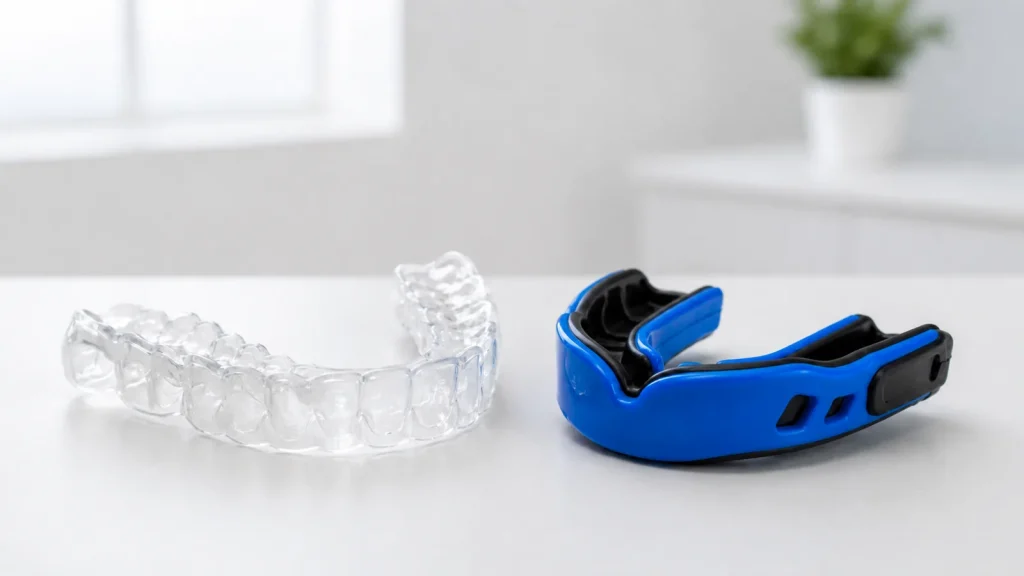
Night guards and sports mouthguards are not interchangeable. Compare their purpose, fit, protection, use, and replacement, and learn when a dental assessment may help.