
Extraction for Implant Newmarket — The First Step Toward a New Tooth
If a tooth is too damaged to save, removing it can be the first step toward replacing it with a dental implant. Extraction for implant Newmarket care at Eagle Family Dentistry starts with a careful assessment of the tooth, your gums and your jawbone, so that every recommendation is based on your individual situation — not a one-size-fits-all plan.
Sometimes an implant can be placed soon after a tooth comes out. In other cases, the area needs time to heal first, or the bone needs extra support before an implant will be stable. Your dentist will explain which approach fits your case, what each step involves, and what healing usually looks like along the way.
On this page you will learn why a tooth may need to be removed before an implant, who this treatment is — and is not — suited for, and the questions worth asking at your consultation. To book an assessment, call our Newmarket office at (905) 836-6111.
+1 (905) 836-6111

1-2 sessions
Yes
10 min- 45 min
------
Mid Level
Confirmed by your dentist at your visit after an assessment
Book an Appointment
Consultations about dental implant treatment are free.
Experienced emergency dentist in Newmarket
Walk-in patients are welcome in the event of a dental emergency
A well-equipped emergency dental clinic serving Newmarket & around

What Does Extraction for an Implant Mean?
A dental implant is a small titanium post that is placed in the jawbone, where it works much like a natural tooth root. Once the implant has fused with the bone, it can support a crown that looks and functions like a real tooth. Before any of that can happen, however, a tooth that cannot be saved sometimes has to come out — and that removal is planned with the implant in mind.
This is different from a routine extraction. The goal is to remove the tooth while protecting the surrounding bone and gum, because that bone is what will hold your implant. Depending on your case, the implant may be placed at the same appointment as the extraction, or after a healing period. Not every damaged tooth needs to be removed, either: when a tooth can be predictably saved, your dentist will discuss ways to save a damaged tooth first. Extraction for Implant Newmarket treatment is recommended only when keeping the tooth is no longer a reliable option.
When Is Extraction for Implant Treatment in Newmarket Recommended?
A tooth is usually considered for removal and implant replacement when treating it further would be unpredictable or short-lived. The most common reasons include:
- Decay too extensive to restore — when so much of the tooth is gone that a filling or crown has nothing sound to hold on to.
- A crack or fracture below the gumline — especially a split root, which cannot be repaired reliably.
- A previously treated tooth that is failing — for example, a tooth with an old root canal treatment, ongoing infection, or a new fracture, where retreatment is unlikely to succeed.
- Advanced gum disease — when the bone and ligament supporting the tooth have broken down and the tooth has become loose.
- Severe infection around the root — where the infection is damaging the surrounding bone and the tooth cannot be predictably disinfected and sealed.
- An impacted or badly positioned tooth — a tooth that never came in properly, or one standing in the way of a planned replacement.
Who may not be a candidate right away: Implant treatment is not suitable for everyone. Children and teens whose jaws are still growing need to wait. People with uncontrolled diabetes or other conditions that slow healing, people who smoke heavily, patients taking certain bone medications, and anyone with untreated gum disease may need medical management or preparatory treatment first — or may be better served by a bridge or a denture. Your dentist will review your medical history with you and explain honestly which options make sense in your case.
What Happens During an Extraction for Implant Appointment?
Step 1 — Assessment and imaging. Your dentist examines the tooth and takes X-rays or a 3D scan to see the root, the surrounding bone, and nearby structures. This is where the timing decision is made: implant right away, or after healing.
Step 2 — The extraction. The area is frozen with local anesthetic so it is fully numb. The tooth is then loosened and removed as gently as possible to protect the bone. Most people feel pressure during this step rather than sharp pain, and some soreness afterwards is normal — you will go home with clear aftercare instructions.
Step 3 — Preparing the site. If the bone around the socket is thin, your dentist may recommend grafting options that rebuild the jawbone at the time of extraction, so the site keeps its shape while it heals.
Step 4 — The implant and crown. Once the site is ready, the implant post is placed. After it has integrated with the bone, the final crown that completes your implant is attached — this is the visible tooth you will chew and smile with.

Healing After Extraction — and When the Implant Goes In
The first few days after an extraction are about protecting the blood clot that forms in the socket: rest, soft foods, no smoking, and no poking at the area. The gum typically closes over within a couple of weeks, while the bone underneath remodels and strengthens over the following weeks and months.
That healing time is not wasted time — an implant needs stable bone to succeed, and placing it too early into a site that is infected or too soft can compromise the result. Depending on your case, the implant may be placed a few weeks to a few months after the extraction; if grafting was done, the wait can be longer. If the gap will be visible while you heal, ask your dentist about temporary tooth options so you are not left without a tooth in the meantime. You will have follow-up visits so the team can check healing and confirm when the site is ready.
Learn more: general information about dental implants and tooth replacement is available from the Ontario Dental Association and the Canadian Dental Association. Our dentists are general dentists licensed in Ontario and regulated by the Royal College of Dental Surgeons of Ontario.
Book an Assessment for Extraction and Implant Treatment
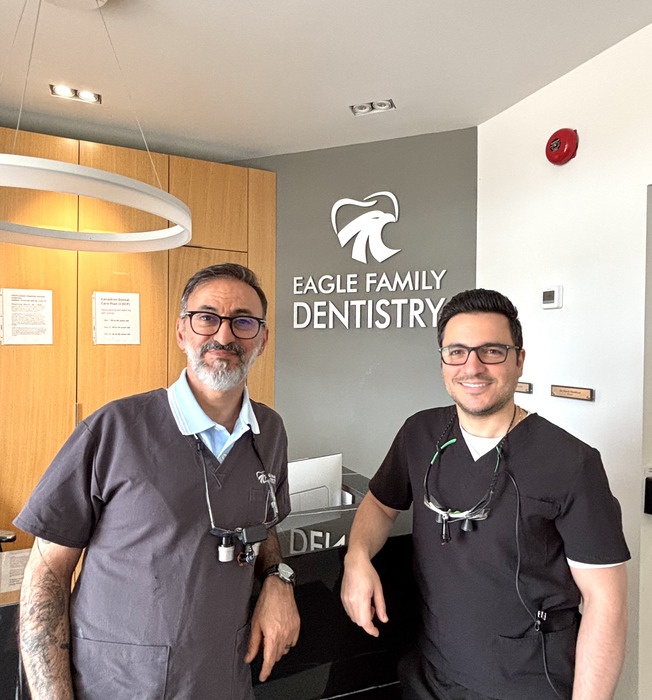
If you have a tooth that is badly damaged, painful, or has been treated before and is failing again, the first step is an assessment — not a commitment. Dr. Meysam Jahanmehr and Dr. Saeed Meshksar, our general dentists, will examine the tooth, review your imaging, and explain whether it can be saved or whether removal followed by an implant plan is the more reliable path. Consultations about dental implant treatment are free, and you will get an honest explanation of your options before you decide anything.
You can also read more about your options for replacing a missing tooth before your visit. When you are ready, call Eagle Family Dentistry in Newmarket at (905) 836-6111 to book your assessment.
A Note on Coverage: the CDCP and Insurance
Tooth extraction is one of the services included under the Canadian Dental Care Plan (CDCP) for people who qualify. If you are planning Extraction for Implant Newmarket treatment, our team will confirm your coverage before anything begins. Coverage is never automatic, though: your eligibility and level of coverage are assessed first, coverage follows the CDCP fee guide, and it may not match the clinic’s full fee. Please also note that dental implants themselves are not part of standard CDCP coverage. If you have private dental insurance, our team can help you confirm what your plan includes before treatment begins, so there are no surprises. Bring your coverage questions to your assessment and we will go through them with you.
Can the implant be placed on the same day as the extraction?
Sometimes, yes. Same-day placement is possible when the surrounding bone is healthy, there is no active infection, and the implant can be positioned with good stability. If the site is infected, the bone is thin, or grafting is needed, it is safer to let the area heal first. Your dentist decides this from your X-rays or 3D scan — not from a preset schedule — and will explain the reasoning for your case.
Will it hurt to have a tooth removed for an implant?
The area is frozen with local anesthetic before the extraction begins, so you should not feel sharp pain during the procedure; most patients describe pressure and movement instead. Some soreness and swelling for a few days afterwards is normal and expected. You will receive aftercare instructions, and your dentist will tell you what pain relief is appropriate for you and when to call the office if discomfort is not settling.
How long do I have to wait after the extraction before the implant is placed?
After an Extraction for Implant Newmarket procedure, healing time depends on the tooth, the bone, and whether grafting was needed. In straightforward cases the implant may be placed within a few weeks; in others, two to four months of healing gives a stronger result, and grafted sites can take longer. Waiting is part of the treatment, not a delay — the implant needs solid bone to fuse with. Your dentist will give you a realistic timeline at your assessment and review it at each follow-up.
What if there is not enough bone left after the tooth comes out?
This is common, especially if the tooth was infected or missing for a while, because jawbone shrinks where a tooth root used to be. Bone grafting can rebuild the area: graft material is placed in the socket or ridge, and over the following months your own bone grows into it. Grafting adds healing time before the implant, but it can make the difference between an implant that is well supported and one that is not. Your dentist will tell you at the assessment whether grafting is likely in your case.
Am I a good candidate for an extraction and implant — and who is not?
Good candidates are adults with finished jaw growth whose general health allows normal healing, and who have — or can build — enough bone to support an implant. You may not be a candidate right now if you have uncontrolled diabetes, untreated gum disease, certain bone conditions or medications, or if you smoke heavily and are not able to cut down during healing. Not being a candidate for an implant does not mean going without a tooth: a bridge or a denture may be a better fit, and your dentist will compare the options honestly.
Is the extraction covered by the CDCP? Is the implant?
Extraction is a service included under the Canadian Dental Care Plan for eligible patients, but eligibility and coverage are assessed first, coverage follows the CDCP fee guide, and it may cover less than the clinic’s full fee. Dental implants are not part of standard CDCP coverage, so the implant portion would not be covered by the plan. Our team can check your situation before treatment so you know exactly where you stand — the clinic will never promise coverage the plan has not confirmed.
What should I ask at my consultation?
Useful questions include: Can this tooth be saved, and what are the chances? What happens if I wait? Will I need grafting, and how long will healing take before the implant? What are my alternatives, such as a bridge or denture, and how do they compare long-term? What follow-up care will I need, and what should I do if I have pain or swelling after the extraction? A good consultation leaves you with a written plan and no pressure to decide on the spot.

Need More Information?
Explore Our Diverse Dental Services


Emergency Dentistry
Eagle Family Dentistry offers immediate dental care to ensure your oral health. Have your emergency dental issues treated in no time.


Dental Implants
We can replace your missing teeth with top-quality, affordable dental implants and help you restore both the health & beauty of your smile.


Cosmetic Dentistry
Gaining a sparkling smile is not a dream anymore with our cosmetic dental services, including dental veneers, teeth whitening, and more.
Which Region Do We Cover?
