
Missing one or more teeth? Dental implants Newmarket appointments begin with an individual assessment. Dental implants are one option for replacing missing teeth and supporting a dental restoration such as a crown. Whether an implant is appropriate depends on your oral health, available bone and individual treatment needs.
At Eagle Family Dentistry in Newmarket, we can assess the area, explain your tooth-replacement options, and discuss the treatment steps, timing and alternatives before you decide how to proceed.
Not sure where to start? Our homepage introduces our Newmarket dentists and the full range of care we provide.
+1 (905) 836-6111


Treatment Purpose
Replace Missing Teeth
Initial Assessment
Oral Health & Bone Evaluation
Treatment Planning
Based on Your Individual Needs
Treatment Timeline
Varies by Treatment Plan
Aftercare
Ongoing Oral Hygiene & Dental Care
Follow-up Care
Individual Maintenance Plan
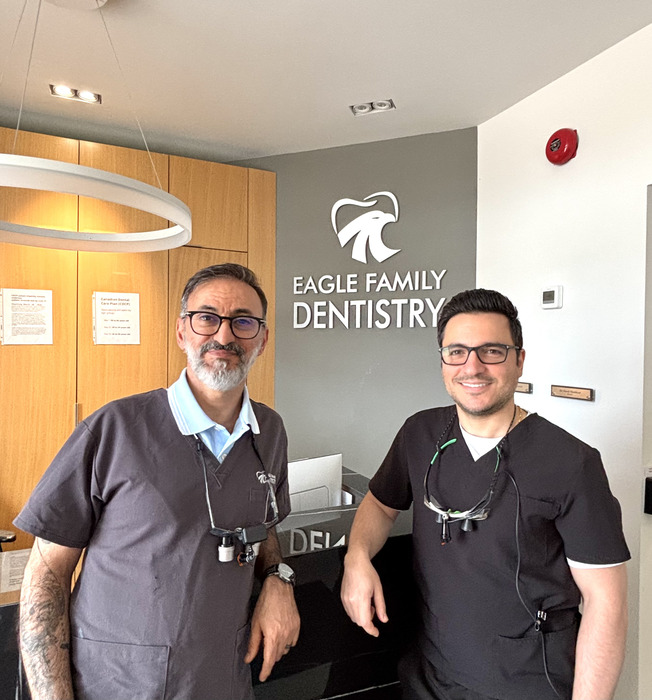
Dental Implant Assessment
Individual evaluation and treatment planning
Appointment Scheduling
Contact our team to arrange a visit
Treatment Planning
Based on your oral health and treatment needs
Newmarket Dental Care
Dental implant care at Eagle Family Dentistry


Dental implants can be one option for replacing one or more missing teeth. Whether implant treatment is appropriate depends on factors such as your oral health, available bone, the location of the missing tooth and your individual treatment needs.
At Eagle Family Dentistry, the first step is an individual assessment. If dental implants are suitable for you, we can explain the recommended treatment stages, expected timeline, alternatives and aftercare before you decide how to proceed.
At Eagle Family Dentistry, a dental implant assessment begins with a review of your oral health, the missing-tooth area and your treatment goals. Depending on your situation, dental imaging may also be needed to evaluate the available bone and surrounding structures.
After the assessment, we can explain whether a dental implant may be appropriate, what other tooth-replacement options are available, and what the proposed treatment may involve. Your treatment plan can vary depending on factors such as the number and location of missing teeth, gum health, available bone and whether preparatory treatment is needed.
Call Eagle Family Dentistry at (905) 836-6111 to arrange an appointment and discuss your tooth-replacement options. An individual assessment can help determine whether dental implants may be appropriate for your needs.
The potential benefits of dental implants depend on your individual situation. The Canadian Dental Association implant guide explains candidacy and ongoing care. An assessment can help determine whether an implant-supported restoration, dental bridge, denture or another treatment option is most appropriate for your oral health and treatment goals
There is no single dental implant treatment plan that applies to every patient. The treatment sequence can vary depending on the number of teeth being replaced, the number of implants required, the type of final restoration, diagnostic imaging and whether additional treatment is needed before implant placement.
For example, some patients may require bone grafting when there is not enough bone to support the proposed implant. After an assessment, Eagle Family Dentistry can explain the recommended treatment plan, what is included and the recommended stages before you decide whether to proceed.
Not always. Dental implants are one option for replacing missing teeth, but they are not the right choice for every patient. A dental bridge, partial denture, complete denture or another treatment approach may be more appropriate depending on your oral health, available bone, neighbouring teeth, treatment goals and individual circumstances.
When implant treatment is appropriate, a single implant can support an implant-supported crown to replace one missing tooth. For patients who are missing several or most of their teeth, other implant-supported options may also be considered, including All-on-4 dental implants in suitable cases. An individual assessment is needed before recommending any implant treatment.
Eagle Family Dentistry is located at 340 Eagle St W, Unit 11, Newmarket, ON. Call (905) 836-6111 to arrange an appointment and discuss whether dental implants may be appropriate for your needs.
Before dental implant treatment begins, your dentist needs to assess your oral health and the area where a tooth or teeth are missing. Dental imaging may also be required to evaluate the available bone and surrounding structures. If an implant is appropriate, the treatment plan can outline the surgical and restorative stages, expected timeline and any preparatory care that may be needed.
Depending on your situation, preparatory treatment may include tooth extraction before implant placement or bone grafting. The exact treatment sequence and timing can vary. Dental implants and implant-related procedures, including implant-supported dentures, are excluded from CDCP coverage. See the current CDCP Dental Benefits Guide and our CDCP Newmarket page.

If you are missing one or more teeth, dental implants may be one of the replacement options available to you. At Eagle Family Dentistry, we can assess the missing-tooth area, review your oral health and discuss whether implant treatment or another tooth-replacement option may be appropriate for your needs.
Your recommended treatment will depend on your individual situation. Before moving forward, we can explain the proposed treatment stages, expected timeline, alternatives and aftercare so you can make an informed decision.
?
A dental implant is placed in the jawbone and can support a replacement tooth or another type of dental restoration. A traditional dental bridge is fixed in place and is usually supported by neighbouring teeth, while dentures are generally removable.
The best option depends on factors such as how many teeth are missing, the condition of the surrounding teeth and gums, available bone and your treatment preferences. If you are comparing these options, read our guide to dental implants vs. dentures or learn more about dental bridges in Newmarket.
You may be a candidate for dental implants if you are in good general health, have healthy gums and have enough jawbone to support the proposed implant. However, candidacy cannot be determined from these factors alone.
Your dentist needs to examine your mouth and review factors such as the missing-tooth area, gum health, available bone and your overall treatment needs. Dental imaging may also be required before determining whether implant treatment is appropriate for you.
Possibly. Having bone loss does not automatically rule out dental implant treatment, but the amount and location of the remaining bone need to be assessed before a recommendation can be made.
In some cases, bone grafting may be considered to improve the available bone for a proposed implant. Whether grafting or another treatment approach is appropriate depends on your individual anatomy, oral health and treatment plan.
Dental implant placement is generally performed with local anaesthesia to numb the treatment area. You should not assume, however, that every patient will have the same experience during or after the procedure.
Some soreness, swelling or discomfort can occur after oral surgery, and the amount can vary from one person to another and with the complexity of the procedure. Your dentist can explain what to expect for your individual treatment and provide appropriate aftercare instructions.
Dental implants are intended to be a long-term tooth-replacement option, but there is no guaranteed lifespan for every implant. How long an implant lasts can depend on factors such as its location, the health of the surrounding tissues, oral hygiene, smoking, bite forces, medical factors and ongoing dental care.
Regular dental examinations and appropriate home care are important for monitoring the implant, the surrounding gums and the restoration it supports. An implant or its restoration may require treatment, repair or replacement if complications develop over time.
After dental implant surgery, follow the specific post-operative instructions provided by your dentist, since care can vary depending on the procedure performed. If you are unsure about cleaning the surgical area, eating, medications or an unexpected symptom, contact the dental office for guidance rather than changing your care routine on your own.
For long-term maintenance, good oral hygiene and regular dental care remain important. Brush carefully, clean between the implant restoration and neighbouring teeth as instructed, and attend recommended dental examinations and hygiene visits so the implant, surrounding tissues and restoration can be monitored over time.
We Are Here:
L3Y
L3X
L4G
L3Z
L0G

Need More Information?


