
Wisdom teeth are the last molars to arrive, and for many people there simply is not enough room for them. Wisdom tooth extraction Newmarket care at Eagle Family Dentistry starts with an assessment and imaging: your general dentist examines the teeth, looks at how they are positioned, and explains honestly whether they need to come out, can be monitored, or should be referred. This page explains the signs that a wisdom tooth is causing trouble, what the extraction appointment involves, and what recovery usually looks like — in plain language, without promises no dentist should make.
+1 (905) 836-6111

Treatment Duration
Usually completed in 1 session
Covered by most insurances
Many plans cover extractions — we will help you confirm your coverage before treatment
Session Length
About 10–45 minutes, depending on the tooth's position
Recovery Time
Often 3–7 days before most daily activities feel normal — varies with the case
Pain Level
The area is frozen during the procedure; some soreness afterwards is normal and expected
Cost per Treatment
Confirmed by your dentist at the visit, after an assessment
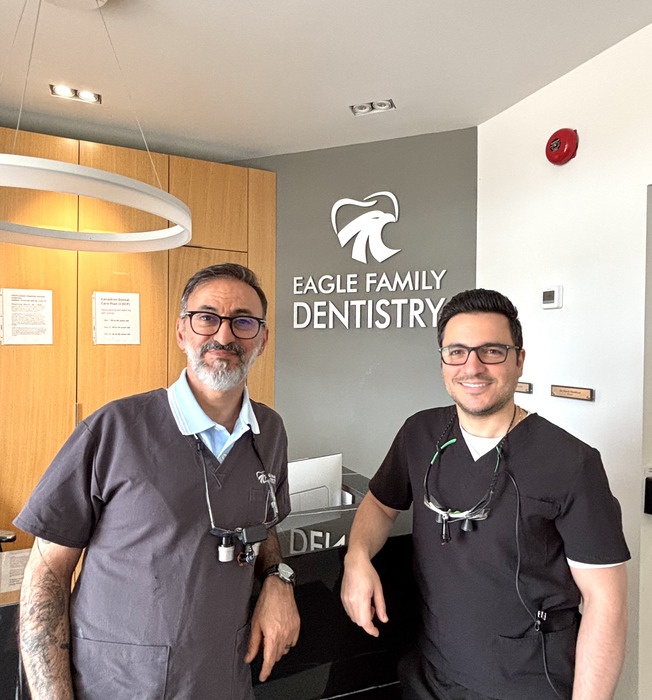
Wisdom tooth assessments with X-rays, explained in plain language
Extractions performed by general dentists licensed in Canada
Honest advice — removal, monitoring, or referral, based on your imaging
Clear aftercare instructions and follow-up after every extraction
Eagle Family Dentistry provides wisdom tooth extraction Newmarket treatment and serves the surrounding area. Your care is provided by our general dentists, who assess each wisdom tooth individually: some are straightforward to remove, some are impacted or positioned close to nerves and need careful planning, and occasionally a case is better handled by a specialist — in which case we will tell you and arrange the referral. What you will not get from us is a blanket recommendation: removal is advised when the evidence says the tooth is causing damage or predictably will.
Before any extraction, we take X-rays to evaluate the tooth’s roots, its angle, and the surrounding structures, and we explain what the images show. The area is frozen with local anaesthetic for the procedure itself, each step is explained as we go, and you will leave with written aftercare instructions and a follow-up plan. Whether your wisdom teeth are fully grown in, partially erupted, or impacted under the gum, you can count on a careful assessment at our Newmarket clinic — call (905) 836-6111.


Book an assessment promptly if you notice any of the following signs. The longer an impacted or infected wisdom tooth is left, the more it can damage the tooth in front of it and the surrounding bone — so once symptoms start, do not wait for them to settle on their own.
• Experiencing unbearable jaw pain
• Swelling or redness of the gum around your wisdom teeth
• Tenderness
• Difficulty in breathing well
When you come in with these symptoms, we take X-rays to evaluate the tooth and the surrounding structures and determine whether extraction is the right step, or whether the problem can be managed another way. Our clinic also provides the restorative care that often surrounds wisdom tooth problems, including fillings and root canal treatment, so your options are explained as one plan rather than separate sales.
Wisdom teeth do not make anybody wiser — and they do not always need to come out. A wisdom tooth that has erupted fully, sits in a healthy position, and can be kept clean may simply be monitored at your regular checkups. Removal is recommended when the tooth is impacted, repeatedly infected, damaging its neighbour, or impossible to clean — the situations in the list below:
Eagle Family Dentistry is a family dental clinic in Newmarket providing wisdom tooth assessment and extraction, alongside emergency and restorative care such as veneers, implants, crowns and root canal treatment. If a wisdom tooth is painful or swollen, see our page on emergency dental care in Newmarket and call us as early in the day as you can.
Good extraction care is mostly decided outside the procedure itself. Before: an assessment and imaging, an honest recommendation, and answers to your questions — including what it will cost, confirmed by your dentist after the assessment. During: proper freezing, a pace you can follow, and the option to pause. After: written aftercare instructions covering eating, cleaning, medication and warning signs, plus a follow-up so healing is actually checked rather than assumed. If anxiety about dental surgery is what has kept you from booking, tell us when you call — knowing what to expect, step by step, is what helps most nervous patients, and we will plan the appointment accordingly. Our dentists are general dentists licensed in Ontario and regulated by the Royal College of Dental Surgeons of Ontario. For trustworthy patient information about oral health, visit the Ontario Dental Association and the Canadian Dental Association.
Impacted wisdom teeth are associated with swelling, infection and pain, and a tooth that keeps causing episodes usually does need to come out — repeated infections rarely improve on their own. But “now” is not the right advice for every wisdom tooth. Teeth that are healthy, well positioned and cleanable can be watched at your regular checkups, with X-rays taken periodically to confirm nothing is changing. The decision is made from your imaging and your history of symptoms, not from the calendar. If you are unsure whether your wisdom teeth need attention, an assessment will answer it: you will leave knowing which teeth we recommend removing, which we recommend monitoring, and why.

?
These are the questions patients ask us most before wisdom tooth extraction Newmarket treatment. For recovery details in depth, see our patient guide on healing after wisdom tooth removal, linked in the answers below — and if your question is not here, call us at (905) 836-6111.
The procedure itself is done with the area fully frozen, so you should not feel sharp pain while the tooth is removed — most patients describe pressure and movement instead. Afterwards, some soreness and swelling for a few days is normal and expected; it is part of healing, not a sign something went wrong. You will go home with aftercare instructions and guidance on pain relief, and we will tell you exactly which symptoms mean you should call us. We will never promise a pain-free extraction — experiences vary — but you can expect honest preparation and support through recovery.
The first days are about protecting the blood clot that forms in the socket — it is the foundation of healing. Rest, stick to soft foods, drink plenty of water, use a cold pack on the cheek in short intervals, take any prescribed medication as directed, and avoid drinking through a straw, smoking, and vigorous rinsing, all of which can dislodge the clot. Our detailed patient guides explain the rest: what to expect while the socket heals and what to eat after wisdom tooth extraction.
No. A wisdom tooth that has erupted into a healthy position, is not damaging its neighbour, and can be kept clean can often simply be monitored at regular checkups. Removal is recommended when a tooth is impacted, repeatedly infected, causing decay in itself or the tooth in front of it, or impossible to keep clean. The recommendation should come from your X-rays and symptoms — if a dentist cannot explain why a specific tooth needs to come out, ask more questions before agreeing.
Your dentist examines the back teeth and gums and takes X-rays to see each wisdom tooth’s position, roots and relationship to nearby nerves and sinuses. You will discuss whether each tooth should be removed, monitored, or — for complex positions — referred to a specialist. You will also hear what the appointment involves, what recovery typically looks like for your case, and the cost your dentist confirms after the assessment. Nothing is booked until you have agreed to the plan.
Dry socket is the most common complication after an extraction: the protective blood clot in the socket is lost too early, exposing the bone and causing pain that typically worsens a few days after the procedure instead of improving. The best prevention is following your aftercare instructions — no straws, no smoking, no vigorous rinsing or spitting for the first days, and soft foods. If you develop increasing pain after day two or three, call us: dry socket is uncomfortable but very treatable, and it is handled promptly.
We do not publish prices, because the cost depends on the tooth: a fully erupted tooth is a simpler procedure than a deeply impacted one, and whether one tooth or several are treated changes the plan. After your assessment, your dentist confirms the cost with you at the visit, before anything begins. On coverage: tooth extraction is one of the services included under the Canadian Dental Care Plan (CDCP) for people who qualify — but eligibility and your level of coverage are assessed first, coverage follows the CDCP fee guide and may not match the clinic’s full fee, and some services need preauthorization. Private plans often cover extractions in part as well. Bring your details and we will help you confirm what applies to you — see also our guide to the CDCP in Newmarket.
It varies with the case. Many patients are back to quiet work or school in a few days; a physical job, or a more complex impacted extraction, can need longer. Plan for rest on the day of the procedure and lighter activity for the following days, and expect some swelling to peak around the second or third day before it settles. Your dentist will give you a realistic expectation for your specific teeth at the assessment, so you can book the appointment at a time that gives you room to recover.
Need More Information?
Explore Our Diverse Dental Services


