
Veneers are thin, custom-made shells bonded to the front of selected teeth to change their colour, shape or size. At Eagle Family Dentistry, dental veneers Newmarket treatment is planned tooth by tooth: your dentist first checks your enamel, gums and bite, then discusses honestly what veneers can and cannot do for your specific teeth. This page explains the types of veneers, the treatment process, who veneers suit — and who should wait — so you can decide with real information, not promises.
+1 (905) 836-6111


Typically many years with proper care — your dentist will discuss what to expect in your case
Planned over 2–3 appointments in most cases
About 1–2 hours per appointment
Usually minimal — most patients return to normal activities the same day
Usually mild; local anaesthesia is used when teeth are prepared
Confirmed by your dentist at your visit, after an assessment
Veneer treatment provided by general dentists licensed in Canada
Appointments Tuesday to Saturday — call for the next available time
Porcelain and composite veneers, planned tooth by tooth after an assessment
Digital imaging and shade planning for natural-looking results

A veneer is not a generic product — it is a thin shell of porcelain or composite made for one specific tooth, designed to match the teeth around it. At Eagle Family Dentistry, veneer treatment starts with an assessment of the teeth you want to change: their enamel, their position, any existing fillings, and how they meet when you bite. Only then do we discuss whether veneers are the right tool, or whether a simpler option — whitening, bonding, or orthodontic treatment — would serve you better.
Patients usually ask about veneers for teeth that are deeply stained, chipped, worn, slightly gapped or unevenly shaped. Veneers can address all of these, but they are a long-term commitment: placing a porcelain veneer means reshaping a small amount of enamel, and that change is not reversible. Our approach is conservative — change what needs changing, leave healthy tooth structure alone, and aim for a result that looks like your own teeth at their best. To discuss your teeth, call our Newmarket office at (905) 836-6111.
Good veneer work is almost invisible. The shade is chosen against your natural teeth and the teeth you are keeping, the shape follows your other teeth, and the surface has the slight translucency of natural enamel rather than a flat, uniform brightness. That is why planning matters more than the material alone: photographs, shade guides and a discussion of the proposed shape all happen before any tooth is prepared.
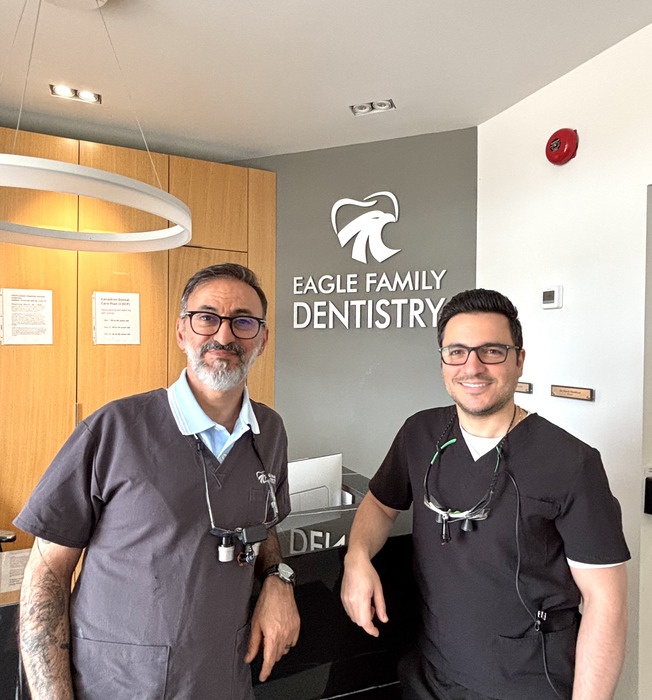
Your treatment is provided by our general dentists, Dr. Saeed Meshksar and Dr. Meysam Jahanmehr, who also manage your everyday dental care — so your veneer plan takes your bite, gum health and existing restorations into account, not just the one tooth in the mirror. If a tooth needs treatment first — a failing filling replaced, gum inflammation settled — that comes before cosmetic work, because veneers placed on unhealthy teeth fail early.

Porcelain veneers: Porcelain veneers are made in a dental laboratory from impressions or digital scans of your prepared teeth. Porcelain resists staining well, reflects light much like natural enamel, and is the more durable option — it is usually chosen when several front teeth are being treated or when the colour change needed is significant. Porcelain veneers typically take two treatment visits: one to prepare the teeth and record their shape, and one to bond the finished veneers.
Composite veneers: Composite veneers are built directly on the tooth by your dentist in a single visit, using tooth-coloured resin that is shaped and polished in place. They are more conservative — often little or no enamel is removed — and easier to repair if they chip. Their trade-offs are that composite stains more readily than porcelain over time and generally does not last as long before it needs resurfacing or replacement.
Neither type is “better” for everyone. The right choice depends on how many teeth are involved, the change you want, your bite, whether you grind your teeth, and how you weigh durability against conservatism. At your consultation, your dentist will explain which type suits your teeth and why — including the option of starting with the less invasive treatment.
Dental veneers Newmarket treatment at our clinic follows a clear sequence. The infographic below summarises the steps; here is what each one actually involves:
1. Assessment and planning. Your dentist examines the teeth, takes X-rays or scans if needed, and discusses what you want to change. Shade and shape are planned, and you receive your treatment plan — including the cost your dentist confirms after the assessment — before anything begins.
2. Preparation. At the preparation visit, a small amount of enamel — usually less than a millimetre — is reshaped so the veneer will sit flush with the tooth. Local anaesthesia is used so the area is numb while your dentist works. An impression or digital scan is sent to the laboratory, and temporary veneers protect your teeth while yours are made.
3. Try-in and bonding. When the veneers arrive, your dentist checks their fit, shape and shade with you before bonding anything. Adjustments come first; only when you and your dentist are satisfied are the veneers permanently bonded and polished.
4. Review. A short review visit checks your bite and how your gums are settling, and your dentist goes over care — including whether a night guard is advisable if you grind your teeth.
Composite veneers follow a shorter path: because they are built directly on the tooth, they are usually completed in the preparation appointment itself.

Veneers are often described in superlatives. Here is what they genuinely offer when they are planned well:
Two honest limits are worth knowing. Veneers do not straighten teeth — they change the appearance of mild misalignment, while actually moving teeth is a job for orthodontic treatment. And veneers do not whiten your remaining natural teeth, so if whitening is part of your plan it is done first, and the veneers are matched to the brighter shade. Your dentist will flag both points at your consultation if they apply to you.
Most adults with healthy teeth and gums can consider veneers. You are likely a good candidate if you have:
Veneers should wait — or may not suit you at all — if you have untreated decay or gum disease (those are treated first), if too little enamel remains for a veneer to bond to, or if you grind your teeth heavily and do not wear a guard, which can chip porcelain. For severe misalignment or bite problems, moving the teeth — with braces or Invisalign — is the healthier answer. The assessment exists to sort this out honestly: if veneers are not right for your teeth, your dentist will say so and explain the alternative.
There is no single price for veneers, because no two cases involve the same number of teeth, the same materials, or the same preparatory treatment. A single composite veneer and a set of porcelain veneers are both “veneers”, but they are very different treatments. That is why we do not publish prices or quote figures without examining you first.
After your assessment, your dentist confirms the cost of your recommended treatment with you at the visit, explains what it includes — laboratory work, temporary veneers, the bonding appointment and the review — and outlines the alternatives, including treating fewer teeth or choosing composite instead of porcelain. Nothing begins until you have agreed to the plan.
Coverage is the other point to understand before you book: veneers are a cosmetic treatment, so they are generally not covered by private dental insurance or by the Canadian Dental Care Plan (CDCP). Where a tooth also needs structural repair, coverage can occasionally be treated differently, and we will help you confirm what your plan says before treatment begins. For patients who use the CDCP for their general dental care: eligibility and coverage are assessed first, and coverage follows the CDCP fee guide, which may not match the clinic’s full fee. Official CDCP details are on Canada.ca: https://www.canada.ca/en/services/benefits/dental/dental-care-plan.html
Porcelain veneer treatment usually runs over two to three appointments across a few weeks: the assessment and planning visit, the preparation visit, and the bonding visit once the laboratory has made your veneers. Composite veneers are typically completed in a single appointment. Exact timing depends on how many teeth are treated and whether anything needs attention first — a tooth with decay or a failing filling is dealt with before cosmetic work, not after. Your dentist will give you a realistic schedule for your case at the planning visit. What we will not do is promise a finished smile by a specific date before your teeth have been assessed.
A veneer consultation at Eagle Family Dentistry is an assessment, not a sales appointment. Your dentist examines the teeth you want to change, checks your enamel, gums, bite and existing fillings or crowns, and may take photographs or X-rays. You will discuss what bothers you about your smile, which type of veneer suits your teeth, what the alternatives are — including simpler options — and what result is realistic for you.
You will leave knowing the recommended plan and the cost your dentist has confirmed after the assessment, and you are welcome to take that plan away and think it over. Veneers are elective and long-lasting, so the decision should never feel rushed. To book a consultation at our Newmarket clinic, call (905) 836-6111. For directions and contact details, see our contact page.
Our dentists are general dentists licensed in Ontario and regulated by the Royal College of Dental Surgeons of Ontario. For trustworthy patient information about oral health, visit the Ontario Dental Association and the Canadian Dental Association.

?
Patients considering dental veneers Newmarket treatment ask us these questions most often. If yours is not here — including how to book — call us at (905) 836-6111 and we will answer it directly.
A veneer is a thin shell of porcelain or composite bonded to the front of a tooth to change its colour, shape, size or surface. Veneers are used for teeth that are deeply stained (including stains whitening cannot lift), chipped, cracked or worn at the edges, slightly gapped, or uneven in shape or length. They can also mask mild misalignment. What veneers cannot do is move teeth, replace missing teeth, or treat disease — decay, gum problems and infections are always dealt with first or as part of the plan.
Porcelain veneers are laboratory-made: they resist staining well, look very natural, and are the more durable option, but they take two visits and require enamel reshaping. Composite veneers are built directly on the tooth in one visit, are more conservative and easier to repair, but stain more readily and generally need resurfacing or replacement sooner. The right choice depends on how many teeth are involved, the size of the change you want, your bite, and whether you grind your teeth. Your dentist will recommend one for your teeth and explain the reasoning — neither is the automatic answer.
Good candidates are adults with healthy gums, no untreated decay, and enough enamel for a veneer to bond to, who want to change the colour, shape or alignment-appearance of specific teeth. You should wait, or choose a different treatment, if you have active gum disease or untreated cavities, if a tooth is too weak or too short of enamel to hold a veneer, or if you grind your teeth heavily and will not wear a night guard. For severe crowding or bite problems, orthodontic treatment is usually the healthier first step. The consultation assessment exists to make this call honestly.
The preparation visit uses local anaesthesia, so the tooth being shaped is numb while your dentist works. Many patients need no anaesthesia at all for composite veneers, where little or nothing is removed. Afterwards, some sensitivity to hot and cold for a few days is common, both with temporary veneers and just after bonding, and it settles as the tooth adjusts. We will not promise a completely pain-free experience — experiences vary — but each step is explained in advance, and you can ask for a pause at any point. If dental visits make you anxious, tell us when you book so we can plan an unhurried appointment.
Porcelain veneers commonly last a decade or longer, and composite veneers typically serve several years before needing resurfacing or replacement — but lifespan depends heavily on your bite, your habits and your home care, so no honest dentist will guarantee a number of years. Care is straightforward: brush and floss as you would natural teeth, keep regular checkups so the edges of the veneers are monitored, avoid biting very hard objects (ice, pens, packaging) with veneered teeth, and wear a night guard if you grind. A veneered tooth can still decay at its edges, which is why the checkups matter.
Placing a porcelain veneer does involve permanently reshaping a small amount of enamel — usually less than a millimetre — so it is a long-term commitment, not a reversible trial. That is exactly why a careful assessment matters: veneers should only be placed on teeth that genuinely benefit, and conservative preparation removes as little as the case allows. Composite veneers are the more reversible option, since they often need little or no enamel removal. Your dentist will explain, tooth by tooth, what preparation yours would involve before you decide.
We do not publish prices, because the cost depends on your individual case: how many teeth are treated, whether you choose porcelain or composite, the laboratory work involved, and whether any underlying treatment is needed first. After your assessment, your dentist confirms the cost of your recommended plan with you at the visit, before anything begins. On coverage: veneers are cosmetic, so private dental insurance generally does not cover them, and the Canadian Dental Care Plan (CDCP) does not cover cosmetic treatments. CDCP coverage for general dental care is in any case assessed against your eligibility first and follows the CDCP fee guide, which may not match the clinic’s full fee. Bring your plan details to your visit and we will help you confirm exactly what applies to you.
Ask: Which of my teeth would you treat, and which would you leave alone — and why? Porcelain or composite for my teeth, and what are the trade-offs? What are the less invasive alternatives, and what would they achieve? How long should the result last, and what maintenance does it need? What happens if a veneer chips or comes off? And what is the total cost, confirmed in my plan? A dentist who welcomes these questions and answers them in plain language is giving you what a real decision needs. You are welcome to take the plan away and think it over — veneers are elective, and it should never feel rushed.
Need More Information?
Explore Our Diverse Dental Services


Cosmetic Dentistry
Cosmetic treatments — veneers, whitening and bonding — planned after an assessment of your teeth and gums, so the change you choose is the one your smile actually needs.


Dental Implants
Implants replace missing teeth with restorations that look and work like natural teeth. Your dentist assesses your bone, gums and bite before recommending treatment.


Teeth Whitening
Professional whitening brightens natural enamel that has stained over time. Your dentist checks your oral health first and explains the shade change you can realistically expect.