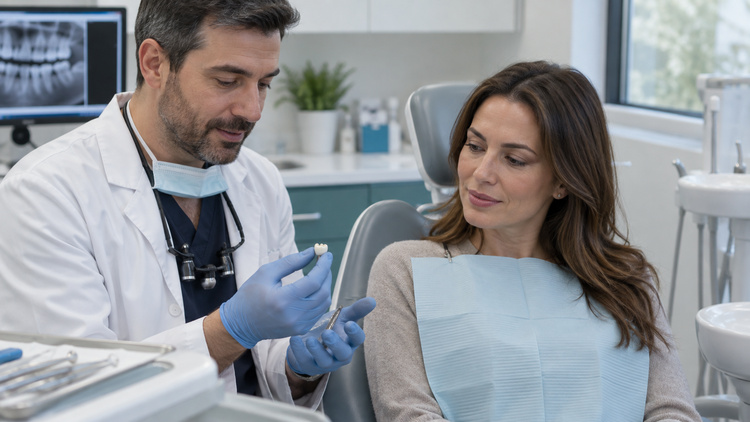
If your dental crown has fallen out, keep the crown if you can find it, avoid chewing on the exposed tooth, and contact a dentist for advice. Do not use superglue or another household adhesive to attach the crown yourself. Whether the crown can be re-cemented or needs to be replaced depends on the condition of the crown and the tooth underneath.
A lost crown does not always mean the tooth is permanently damaged, but it should not be ignored. The exposed tooth may become sensitive, food can collect around it, and an underlying problem such as decay, a fracture, or a change in the crown’s fit may need to be assessed.
If you have a loose or missing crown, a dentist can examine the tooth and determine the appropriate next step.
What Should You Do Right After a Dental Crown Falls Out?
The first few steps are mainly about protecting the tooth and preserving the crown until it can be assessed.
1. Find and Save the Crown
If the crown has come out in one piece, place it somewhere safe and bring it to your dental appointment.
Do not throw it away simply because it has become loose. In some situations, an intact crown may be reusable, but a dentist needs to examine both the crown and the supporting tooth before deciding whether re-cementation is appropriate.
2. Gently Keep the Area Clean
Rinse your mouth gently and continue normal oral hygiene around the area without aggressively brushing or probing the exposed tooth.
Keeping the area clean can help limit food and plaque accumulation while you wait for an assessment.
3. Avoid Chewing on That Side
The prepared tooth underneath a crown may be more vulnerable than an untreated tooth. Until your dentist evaluates it, try to avoid chewing hard, sticky, or crunchy foods on that side.
If the tooth is sensitive, very hot, cold, or sweet foods may also be uncomfortable.
4. Contact Your Dentist
Call your dentist and explain whether the crown is temporary or permanent, when it came out, whether you still have the crown, and whether the tooth or crown appears broken.
Also mention any pain, swelling, bleeding, sensitivity, or recent injury. These details can help the dental office determine an appropriate next step.
If you are in Newmarket, you can also review our emergency dental care in Newmarket information for guidance on contacting Eagle Family Dentistry about an urgent dental concern.
What Should You Avoid After a Crown Comes Off?
Some quick fixes can create a larger problem.
Most importantly, do not use superglue or another household adhesive to attach the crown. These products are not intended for dental treatment and can interfere with professional assessment or treatment.
You should also avoid forcing the crown back into place if it does not fit easily. A change in the tooth, cement, or crown may be the reason it came loose in the first place.
Do not keep testing the exposed tooth by biting on it. Repeated pressure may increase discomfort or damage a weakened tooth.
Is a Crown Falling Out a Dental Emergency?
A lost crown usually needs dental assessment, but the level of urgency depends on your symptoms and what happened to the tooth.
A crown that comes off without significant pain or swelling may not require emergency medical treatment. However, you should still contact a dentist rather than leaving the tooth unprotected indefinitely.
Seek prompt dental care if you have:
- significant or worsening tooth pain;
- a broken or visibly damaged tooth beneath the crown;
- swelling around the tooth or gums;
- symptoms after a dental or facial injury;
- a persistent bad taste or another symptom that may suggest an oral problem; or
- difficulty biting because the tooth or remaining restoration feels damaged.
Seek emergency medical care when a dental or facial problem involves difficulty breathing or swallowing, rapidly increasing facial or neck swelling, uncontrolled heavy bleeding, or serious facial trauma.
Why Do Dental Crowns Fall Out?
A crown can become loose for different reasons, and it is not always possible to identify the cause by looking at the crown yourself.
Possible factors include deterioration of the cement holding the crown, damage to the crown, changes or decay in the supporting tooth, fracture of the underlying tooth, or repeated heavy biting forces.
Crowns can also be damaged by very hard or sticky foods, and clenching or grinding may place additional force on teeth and restorations.
This is why simply putting the crown back on does not necessarily solve the underlying problem. A dental examination may be needed to identify why the crown became loose and whether the tooth remains suitable for the same restoration.
Can a Dentist Put the Same Crown Back On?
Sometimes, but not always.
If the crown remains intact, still fits correctly, and the tooth underneath is healthy enough to support it, a dentist may determine that re-cementation is appropriate.
A new crown or another treatment may be required if:
- the crown is cracked or damaged;
- it no longer fits properly;
- decay has developed beneath or around the restoration;
- the supporting tooth has fractured;
- there is insufficient healthy tooth structure to retain the crown; or
- another dental problem needs to be treated first.
The decision depends on a clinical examination and, when appropriate, dental imaging.
You can learn more about how crowns are used to restore damaged teeth on our Dental Crowns in Newmarket page.
What If a Temporary Crown Falls Out?
Temporary crowns are designed to protect a prepared tooth while the final restoration is being made or while another stage of treatment is completed.
If a temporary crown comes off, keep it and contact the dental office that placed it. Avoid chewing on the prepared tooth and do not attempt to permanently bond the crown yourself.
The dentist may want to replace or re-cement the temporary crown to protect the tooth and maintain the space and shape needed for the final restoration.
Do not assume that because the crown is temporary, it is safe to leave the tooth uncovered until your next scheduled appointment.
What If the Crown Came Out With Part of the Tooth?
This situation needs professional assessment.
A crown may occasionally come out together with filling material, a buildup, or part of the underlying tooth. From home, it can be difficult to determine exactly what has broken.
Do not try to separate pieces or force the crown back onto the tooth. Keep anything that has come out and bring it with you.
Your dentist will need to determine how much healthy tooth remains and whether the tooth can be restored.
Depending on the findings, treatment options can vary considerably, so the appearance of the crown alone is not enough to determine whether you need another crown, root canal therapy, or another form of treatment.
Why Does the Tooth Hurt After the Crown Falls Out?
The tooth underneath a crown has been prepared so the restoration can fit over it. Once the crown is missing, the tooth may respond more strongly to temperature, pressure, or food.
Pain can also have other causes, including damage to the remaining tooth or a problem that developed underneath the restoration.
Sensitivity therefore does not tell you by itself whether the crown simply needs to be re-cemented. Persistent, severe, or worsening pain should be assessed by a dentist.
Can You Eat While Waiting to Have the Crown Checked?
You can generally continue eating, but protect the affected area.
Choose foods that require less force to chew and use the opposite side of your mouth when practical. Avoid very hard, crunchy, or sticky foods that could place pressure on the exposed tooth.
If temperature triggers sensitivity, let foods and drinks reach a more comfortable temperature before consuming them.
Continue gentle brushing and cleaning around the area rather than avoiding oral hygiene entirely.
What Will a Dentist Check After a Crown Falls Out?
The appointment is not only about putting the crown back.
The dentist may examine:
- the condition of the crown;
- the amount and quality of tooth structure remaining;
- whether the crown still fits;
- signs of decay or fracture;
- the health of the gums around the tooth;
- your bite and the forces placed on the restoration; and
- symptoms that may indicate a deeper problem.
Dental X-rays or other tests may be recommended when the clinical examination suggests an issue that cannot be fully assessed visually.
The goal is to identify why the crown came off before deciding what should happen next.
How Can You Reduce the Risk of a Crown Coming Loose Again?
No dental restoration is indestructible, but routine care can reduce avoidable problems.
Brush the crowned tooth carefully with fluoride toothpaste and clean between the teeth daily. Attend regular dental exams in Newmarket so your dentist can assess the crown, surrounding gums, and supporting tooth.
Avoid routinely chewing ice and other very hard objects.
If you grind or clench your teeth, tell your dentist. Depending on the findings, they can assess whether a custom night guard or another approach is appropriate.
Have a Loose or Missing Crown Assessed
If your dental crown has fallen out or feels loose, keep the restoration if possible and arrange a dental assessment rather than attempting a permanent repair at home.
Eagle Family Dentistry provides dental care in Newmarket, including dental crown and emergency dental services. Call (905) 836-6111 or use our contact page to request an appointment and describe what happened.
Appointment availability should be confirmed directly with the office. For difficulty breathing or swallowing, rapidly spreading facial or neck swelling, uncontrolled heavy bleeding, or serious facial trauma, seek emergency medical care.
Frequently Asked Questions
Can I leave a dental crown off overnight?
The appropriate timing depends on the condition of the tooth and your symptoms. Keep the crown safe, avoid chewing on the affected tooth, and contact a dentist for advice rather than intentionally leaving the tooth untreated for an extended period.
Can I glue my crown back on?
Do not use superglue or household adhesive. If you are considering a temporary dental repair product, follow its instructions and ask a dental professional or pharmacist whether it is appropriate for your situation. It does not replace a dental assessment.
Does a crown falling out mean the tooth is ruined?
No. A crown may come loose even when the underlying tooth can still be restored. A dentist needs to examine the crown and tooth to determine whether re-cementation, replacement, or another treatment is appropriate.
What if my crown falls out but I have no pain?
No pain is reassuring, but it does not show whether the tooth or crown is healthy. Keep the crown, protect the area, and arrange a dental assessment.
Can a permanent crown be re-cemented?
In some cases, yes. Re-cementation depends on the condition and fit of the crown and the health and structure of the underlying tooth.
Should I go to the hospital for a lost crown?
A lost crown by itself is generally managed by a dentist. Emergency medical care is appropriate for serious symptoms such as difficulty breathing or swallowing, rapidly spreading facial or neck swelling, uncontrolled heavy bleeding, or major facial trauma.