Ask ten people how often you should get your teeth cleaned and most will give you the same answer without thinking: every six months. It’s one of those rules everyone knows — but where did it come from, and is it actually the right schedule for your mouth?
The honest answer is that six months is a reasonable default for many people, but it was never a law of nature. Modern dental guidance sets your cleaning interval individually, based on the health of your gums, how quickly tartar builds up on your teeth, and your personal risk factors. Some people genuinely need to come in every three or four months; others can safely go longer. This guide explains how that decision is made, what a cleaning appointment actually involves, and how programs like the CDCP and workplace insurance fit into the schedule — so you can tell whether your current routine is right for you.
Where the “Every 6 Months” Idea Came From
The twice-a-year habit is older than the science behind it. It took hold in the early-to-mid twentieth century — spread through hygiene advice and, famously, toothpaste advertising — and it stuck because it was simple, memorable, and a workable rhythm for the average mouth. What it was not based on was a study that tested six months against nine or twelve and proved six the winner.
When researchers have reviewed the evidence since, they have not found strong support for one fixed interval that suits everyone. That’s why dental associations and practising dentists increasingly describe recall visits the same way: the interval should be set for the individual, after an assessment, and reviewed as your health changes. For a lot of adults, that individual answer still lands on about every six months — which is why the saying survives. But for the people in the next sections, it lands somewhere else, in both directions.
So treat “every six months” as a starting question, not an answer. The answer comes from what your hygienist and dentist find — which raises a fair question: what exactly are they looking for at a professional teeth cleaning in Newmarket?
What Your Hygienist Is Actually Checking (It’s Not Just Polish)
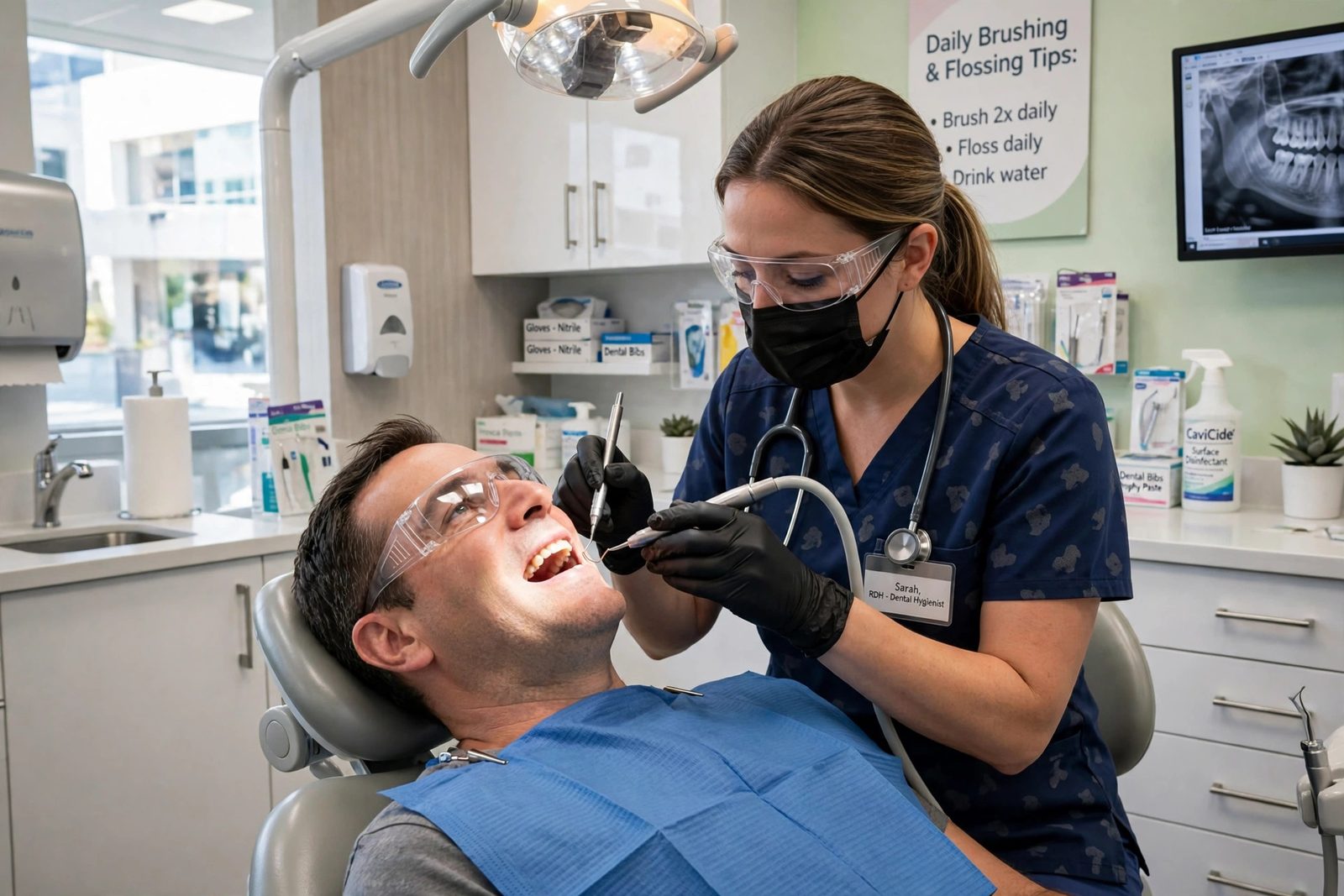
A cleaning appointment does more than make your teeth feel smooth. Here’s what the visit actually covers:
- Removing what brushing can’t. Soft plaque builds up on teeth every day. Given time, it hardens into tartar (also called calculus) — and once plaque has hardened, no amount of brushing or flossing at home will remove it. Your hygienist removes plaque and tartar from above and below the gumline with professional instruments; that removal, called scaling, is the core of the appointment.
- Checking your gums. The hygienist looks for bleeding, swelling and pockets forming between tooth and gum — the early signs of gum disease. Early gum inflammation (gingivitis) is reversible; catching it at this stage is one of the main reasons the interval matters.
- Screening the whole mouth. Soft tissues — cheeks, tongue, palate — are checked for anything unusual, and your teeth for wear, cracks and failing fillings.
- Polishing and stain removal. The polish at the end removes surface stain from coffee, tea and tobacco and leaves teeth smoother, which makes them a little harder for new plaque to grip.
- Updating your home-care game plan. Expect specific feedback: the spots you’re missing, whether a different brush or interdental tool would help, and fluoride advice where it’s relevant.
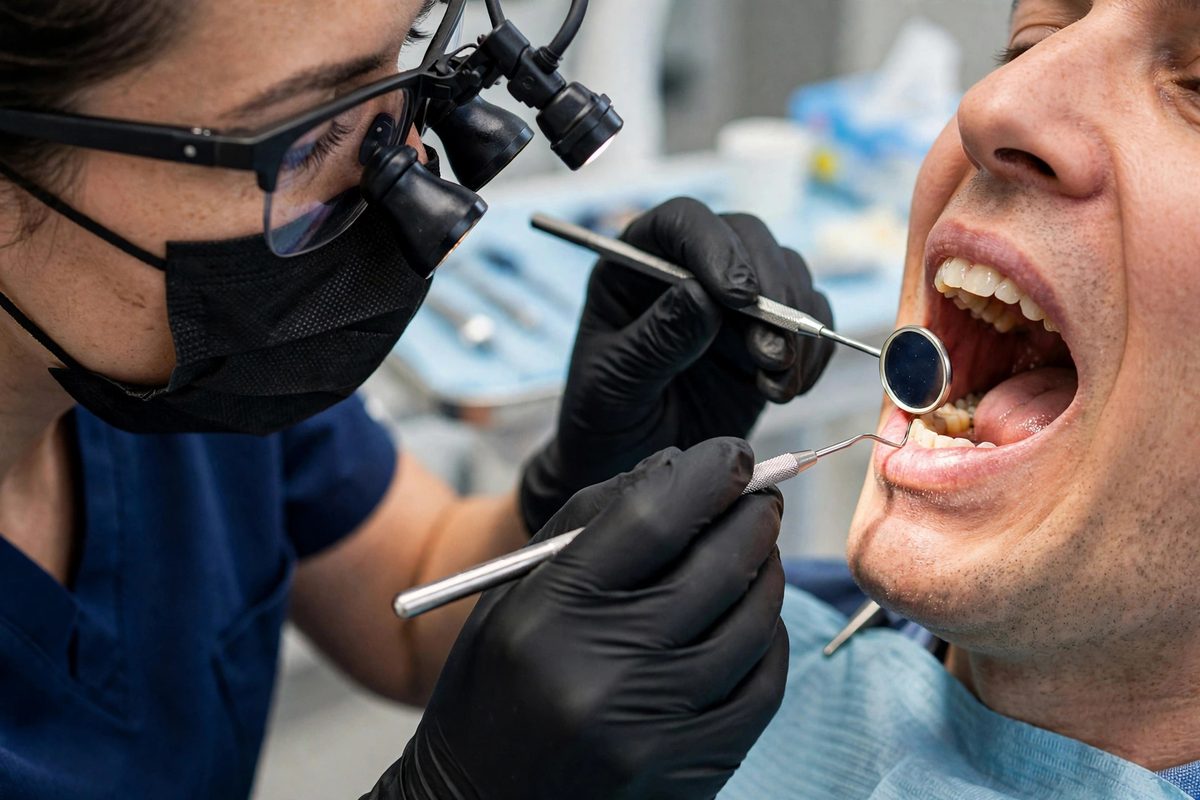
In other words, a cleaning is partly treatment and partly surveillance. The right interval is the one that keeps the surveillance ahead of the problems — and that depends on how fast things change in your mouth.
Who Genuinely Needs More Frequent Cleanings
For the following situations, dentists commonly recommend a shorter interval — often every three to four months — because plaque, tartar and inflammation move faster than a six-month cycle can catch:
- You have had gum disease. After treatment for periodontitis, maintenance visits at shorter intervals help keep the disease from re-establishing itself in the pockets around your teeth. This is probably the most common reason for a three-to-four-month schedule.
- You have diabetes. Diabetes and gum disease influence each other — gum inflammation is harder to control, and infections can be slower to settle — so closer monitoring of your gums is usually part of good care.
- You smoke or vape. Tobacco use raises gum-disease risk and dulls the warning signs (like bleeding) that would otherwise be noticed early.
- You wear braces or other orthodontic appliances. Brackets and wires trap plaque in places a brush struggles to reach, so more frequent professional cleaning helps protect teeth while they move.
- You’re pregnant. Hormonal changes can make gums react more strongly to plaque — the familiar “pregnancy gingivitis” — so your dentist may suggest keeping visits closer together during pregnancy.
- You have dry mouth. Saliva protects teeth; many medications and some conditions reduce it, and less saliva means cavities start faster. More frequent checks and fluoride support are commonly recommended.
- You build tartar quickly or have a history of frequent cavities. Some mouths simply mineralize plaque faster than others. If that’s you, your hygienist already knows — it’s in your chart, and it drives your interval.
None of these is a life sentence to a fixed schedule. Intervals get reviewed at each visit, and if your gums stay healthy, your dentist may lengthen the gap again.
Who May Safely Go Longer
The individual approach cuts both ways. If you are an adult with healthy gums, no history of gum disease, a low cavity rate, and home care that’s genuinely working, your dentist may suggest stretching your recall to nine or twelve months. That’s not cutting corners — it’s the same risk-based logic, applied in the other direction.
Two cautions, though. First, “low risk” is an assessment, not a self-diagnosis: the things that make someone high-risk (early gum pockets, fast tartar buildup, new medications causing dry mouth) often have no symptoms you’d notice at home. Second, risk changes — a new diagnosis, a new prescription, pregnancy, or retirement-age changes in dexterity can all move you from the “longer” group to the “more frequent” one. That’s why the interval is set at a visit and revisited, rather than decided once and forgotten.
What Happens If You Skip a Few Years
Life happens — people move, lose insurance, or simply fall out of the habit. If it’s been a few years, here’s the honest picture of what tends to happen in the mouth, and what coming back looks like:
- Tartar accumulates above and below the gumline, in layers that home care can’t shift.
- Gingivitis sets in — gums that bleed when you brush — and, left alone, can progress to periodontitis, where the bone supporting the teeth is gradually lost. That stage is manageable but not reversible.
- Cavities grow quietly. Small ones that a filling would have fixed early can reach the nerve, turning a simple restoration into a root canal conversation.
- The catch-up visit is bigger. After a long gap, a cleaning may take longer than usual, or be split across two visits, and it starts with a full exam and X-rays so the plan is based on findings, not guesses.
None of that is a reason to feel embarrassed about returning — dental teams see returning patients constantly, and the first appointment after a gap is an assessment, not a judgment. If you’d like the fuller case for staying on a regular rhythm, our companion guide explains why regular cleanings matter in more depth.
Cleaning vs. Checkup: Two Different Appointments
People often use “cleaning” and “checkup” as if they were the same appointment. They’re two different jobs that often share a booking:
- The cleaning is treatment and prevention, usually done by a dental hygienist: scaling, polishing, gum checks, and home-care coaching.
- The checkup (exam) is diagnosis, done by the dentist: examining teeth and gums, reviewing X-rays when they’re indicated, screening for oral cancer and other conditions, and deciding what — if anything — needs treatment. See what a dental exam includes for the full picture.
You can see why the interval question applies to both: a person on a three-month gum-maintenance cycle may still only need a full exam and new X-rays at longer intervals, while someone due for an exam doesn’t automatically need the same cleaning frequency. At Eagle, your schedule for each is set from your findings — not from a single rule applied to every patient.
How CDCP and Insurance Recall Schedules Fit In
Two kinds of schedules land on many patients, and neither one is a clinical prescription:
Insurance recall rules. Many workplace plans describe coverage in units and recall periods — a plan might, for example, cover a cleaning once every nine months. That’s a billing rule about what the plan will pay toward, not a finding about what your mouth needs. If your clinical interval and your plan’s interval differ, we’ll explain the difference and you decide how to proceed, eyes open.
The Canadian Dental Care Plan (CDCP). For eligible patients, the CDCP’s covered preventive services include exams, X-rays, cleaning (scaling) and fluoride applications — see what the CDCP covers (Canada.ca) for the official list. Eligibility is decided by the federal program: in general you must have no access to dental insurance and an adjusted family net income below $90,000, and you apply through the government, not the clinic. Coverage is also subject to the plan’s own rules and frequency limits, and depending on income a co-payment may apply, so it should never be read as covering the full cost of a visit.
If you’re a CDCP patient, tell us when you book and we’ll confirm how your cleaning schedule fits the plan’s rules before treatment begins.
In both cases, the order of decisions is the same: your mouth sets the recommended interval; your coverage sets what it will help pay for; and anything not covered is explained to you in advance — the doctor confirms your cost at your visit, after an assessment, before treatment starts.
So — how often should you get your teeth cleaned? If your gums are healthy and your risk is low, about every six months is a sensible rhythm, and possibly longer. If gum disease, braces, diabetes, smoking, pregnancy or fast tartar buildup are in your picture, every three to four months may be the honest answer. The only way to know which group you’re in is an assessment.
If you’re due — or long overdue — call Eagle Family Dentistry in Newmarket at (905) 836-6111 or contact our Newmarket clinic, and we’ll set a schedule based on your mouth, not on a saying.
References
The guidance in this article reflects Canadian dental practice and patient-education resources from the Ontario Dental Association, the Canadian Dental Association and the Royal College of Dental Surgeons of Ontario (RCDSO). Dentists in Ontario are licensed by the RCDSO, and patients can verify a dentist’s registration on the RCDSO website.
Information about Canadian Dental Care Plan coverage, including its covered preventive services, is from the Government of Canada’s Canadian Dental Care Plan pages (Canada.ca), linked in this article. CDCP rules can change; if anything here differs from Canada.ca, Canada.ca is correct.
Frequently Asked Questions About Teeth Cleaning
Is a cleaning covered by the CDCP?
Cleaning (scaling) is listed among the CDCP’s covered preventive services, along with exams, X-rays and fluoride applications — for patients who are eligible for the plan. Eligibility is confirmed by the federal program first (you apply through the government; in general you must have no access to dental insurance and an adjusted family net income below $90,000). Coverage is subject to the plan’s rules and frequency limits, and depending on your income a co-payment may apply — so it should never be assumed to cover the full cost of a visit. If you’re a CDCP member, let us know when you book and we’ll confirm how your cleaning fits your coverage before the appointment.
Does a cleaning hurt if I have sensitive teeth?
For most people a cleaning is comfortable, but if your teeth are sensitive — from gum recession, worn enamel, or a tooth that needs attention — some areas can be tender during scaling. Tell the team before you start (or raise a hand during): the hygienist can adjust technique and pace, work sensitive areas more gently, and suggest ways to ease sensitivity afterwards. Lasting pain after a cleaning isn’t expected, though — if a tooth stays sensitive or sore, that’s information worth a call, because sensitivity is sometimes the first sign of a cavity or a cracked filling.
How long does a cleaning appointment take?
It depends on how much buildup there is and what else is booked in the same visit. A routine cleaning for someone on a regular schedule commonly takes about 45 minutes to an hour; if it’s your first visit in a long time, or if an exam and X-rays are part of the appointment, allow longer — and after a gap of years, the cleaning may be planned across two visits so it can be done thoroughly and comfortably. When you book, tell us when you last had a cleaning and we’ll book the right amount of time.
Can a cleaning whiten my teeth?
A cleaning can make your teeth look brighter, but it doesn’t bleach them. The polish removes surface stain — from coffee, tea, red wine and tobacco — so teeth often look noticeably cleaner and a shade lighter afterwards. What it can’t change is the natural colour of the tooth itself. If you want your teeth actually whiter than their natural shade, that’s teeth whitening: a separate cosmetic treatment, and one the CDCP does not cover. Many patients have a cleaning first and then decide whether whitening is still something they want.
I brush and floss well — do I still need professional cleanings?
Yes, and it’s not a reflection on your brushing. Plaque that sits undisturbed for even a few days begins to harden into tartar, and tartar bonds to the tooth too firmly for a brush or floss to remove — it takes professional instruments. Tartar also tends to form in the places hardest to clean at home, like behind the lower front teeth and along the gumline of the back molars, which is exactly where your hygienist concentrates. Good home care absolutely slows the buildup and may earn you a longer interval between visits — it just doesn’t replace the visits.
What if it’s been five years since my last cleaning?
Then you book an assessment-first visit, and you are far from the only one — returning after a long gap is completely normal. Expect a full exam and X-rays first, so decisions come from findings rather than guesses. The cleaning itself may take longer than a routine one, or be split into two appointments, and there may be follow-up items — a filling, gum treatment — that get planned in a sensible order rather than all at once. You won’t be lectured about the gap, and you don’t need to apologise for it. The section above on skipping a few years describes what tends to happen and why catching up is worthwhile.
Do children need cleanings every six months too?
Children’s intervals are set individually, just like adults’ — many children do well on a roughly six-month rhythm of checkups and cleanings, but a child with a high cavity rate, braces, or trouble cleaning effectively may be seen more often, and fluoride treatments and sealants are often part of the preventive plan for kids. The pattern matters more than the exact number: regular preventive visits while teeth are developing catch small problems while they’re still small, and they build the habit of the dentist being a normal, boring place to visit. Your child’s dentist will recommend the interval that fits their risk.
Can I book a cleaning without an exam?
The two are usually booked together, because they do different jobs: the cleaning treats and prevents, while the exam is how cavities, gum disease and other conditions are actually diagnosed and caught early. If you only ever cleaned and never examined, problems could develop unseen between visits. If you’re new to our clinic, your first appointment includes an exam so we have a proper baseline. After that, your cleaning interval and your exam interval are set separately, based on your findings — so you get each when you need it, not simply because the calendar says so.