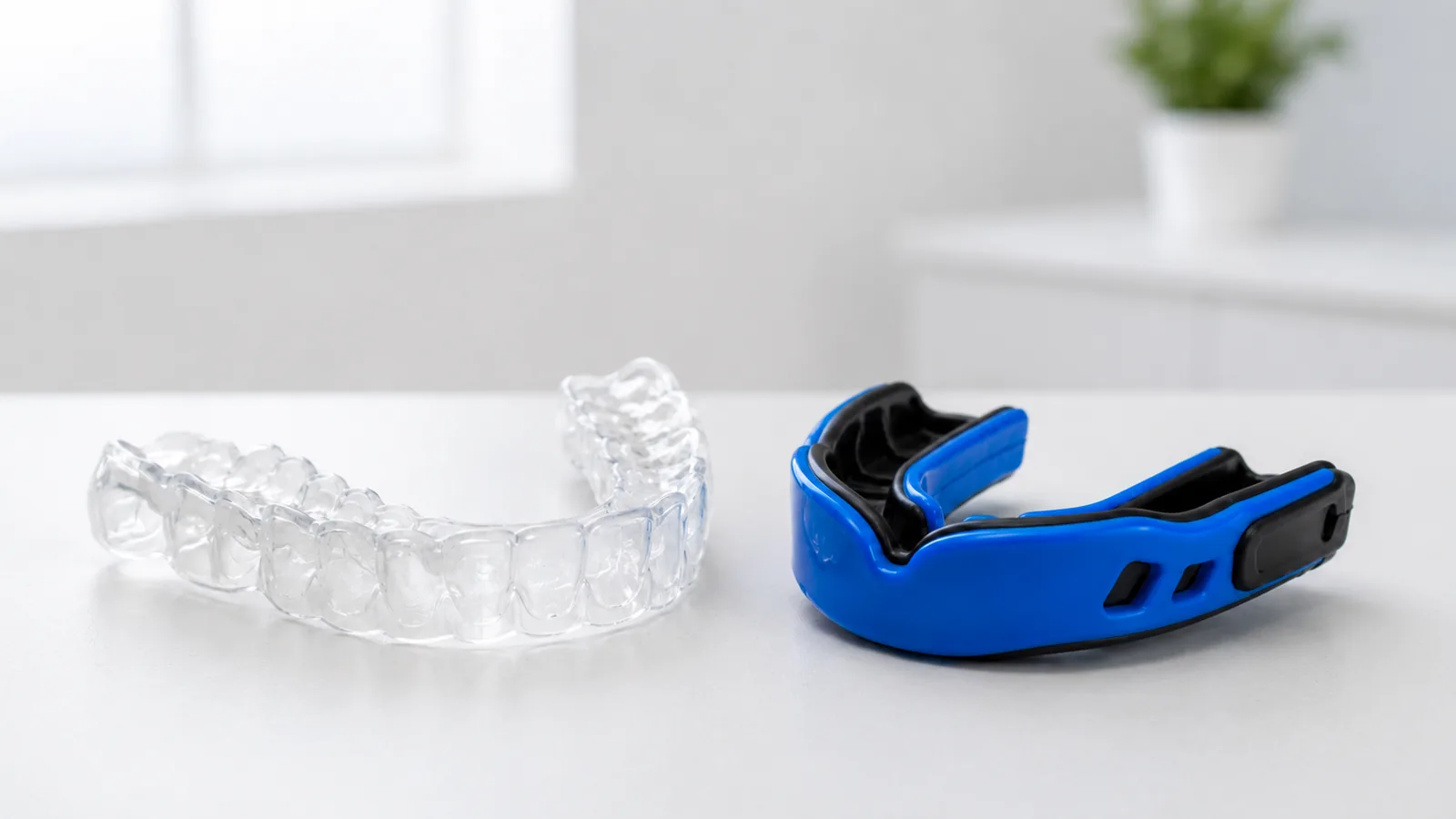
| Question | Night guard | Sports mouthguard |
|---|---|---|
| When is it worn? | During sleep as prescribed | During sports or high-risk activity |
| What does it address? | Tooth wear, fractures and restoration stress from selected grinding or clenching patterns | Impact-related injuries to teeth and oral tissues |
| Typical design | Bite-specific hard, soft or layered appliance | Impact-absorbing, secure and breathable design |
| Can it replace the other? | No | No |
| Who may need replacement often? | Patients with wear or dental changes | Growing children, orthodontic patients and athletes with damaged guards |
Why a Night Guard Is Not Safe for Sports
A night guard is not designed to absorb athletic impact or remain secure during vigorous movement. It may dislodge, interfere with breathing or fail to protect the teeth.
Why a Sports Guard Should Not Be Used for Sleep
A sports guard is generally bulkier and not designed to manage the bite throughout the night. It may be uncomfortable and is not a substitute for a prescribed night appliance.
Does a Night Guard Stop Grinding?
Not necessarily. It may separate and protect the teeth or redistribute selected forces, but grinding activity can continue. Jaw pain, headaches and tooth wear can have multiple causes that require assessment.
What About Braces?
Sports mouthguards for braces need room for tooth movement and protection around brackets. Night guards during active orthodontic treatment require careful coordination because tooth positions are changing.
When to Replace Either Appliance
A guard should be reassessed when its fit, condition or protective function changes.
- It is cracked, chewed, distorted or loose.
- The bite or tooth position has changed.
- New crowns, fillings or orthodontic work affect the fit.
- A child or teenager has grown.
- Odour or buildup cannot be controlled.
- The dentist identifies uneven wear or inadequate protection.
Frequently Asked Questions
Can one custom guard be designed for both purposes?
Usually no. The performance requirements are different.
Is a custom guard always necessary?
The appropriate option depends on sport, risk, age, braces, symptoms and fit. A dental assessment can help.
Are night guards covered by the CDCP?
The current CDCP guide excludes night guards and sports mouthguards.
Choose the Correct Appliance
Use a sports mouthguard for impact protection and a separately prescribed night guard for selected sleep-related grinding or clenching risks.
Eagle Family Dentistry
Call (905) 836-6111 to request an appliance assessment at 340 Eagle St W #11, Newmarket.